
FHA baseline does not require a sewer scope on Cincinnati homes connected to MSD city sewer. Individual Cincinnati-area lenders frequently add overlays on top of FHA baseline based on property age, ZIP risk, or appraiser observations. This guide explains the distinction, lists Hamilton County ZIPs that frequently see overlays, and walks through Ohio septic rules for the outer Warren and Butler county townships still on septic.
This is the line every Cincinnati FHA buyer should know before week one of the inspection period. FHA does not require a buried-lateral camera inspection on properties served by city sewer (per FHA News Blog's appraisal requirements reference, per FHA.com's sewer/septic appraisal article). The FHA appraiser flags visible failure (sinkholes, lawn depressions, sewage smell, backup history) and the lender can require a repair before clearing the loan to close, but FHA does not require the scope itself.
The HUD Single Family Handbook 4000.1 is the authoritative document for FHA appraisal and inspection requirements (per HUD's Single Family Handbook). The septic section sits inside the appraiser's property-condition checklist; the city-sewer section does not include a scope mandate.
The reality on the ground in Hamilton County is different. Cincinnati lenders that have paid claims on properties with failed sewer laterals in specific ZIPs add overlays. The overlay is a lender business decision on top of FHA baseline. The buyer experiences it as "FHA requires a scope on this property," which is true in effect but not in source. The distinction matters because a buyer can sometimes shop lenders to avoid an overlay, but they cannot shop the FHA baseline.
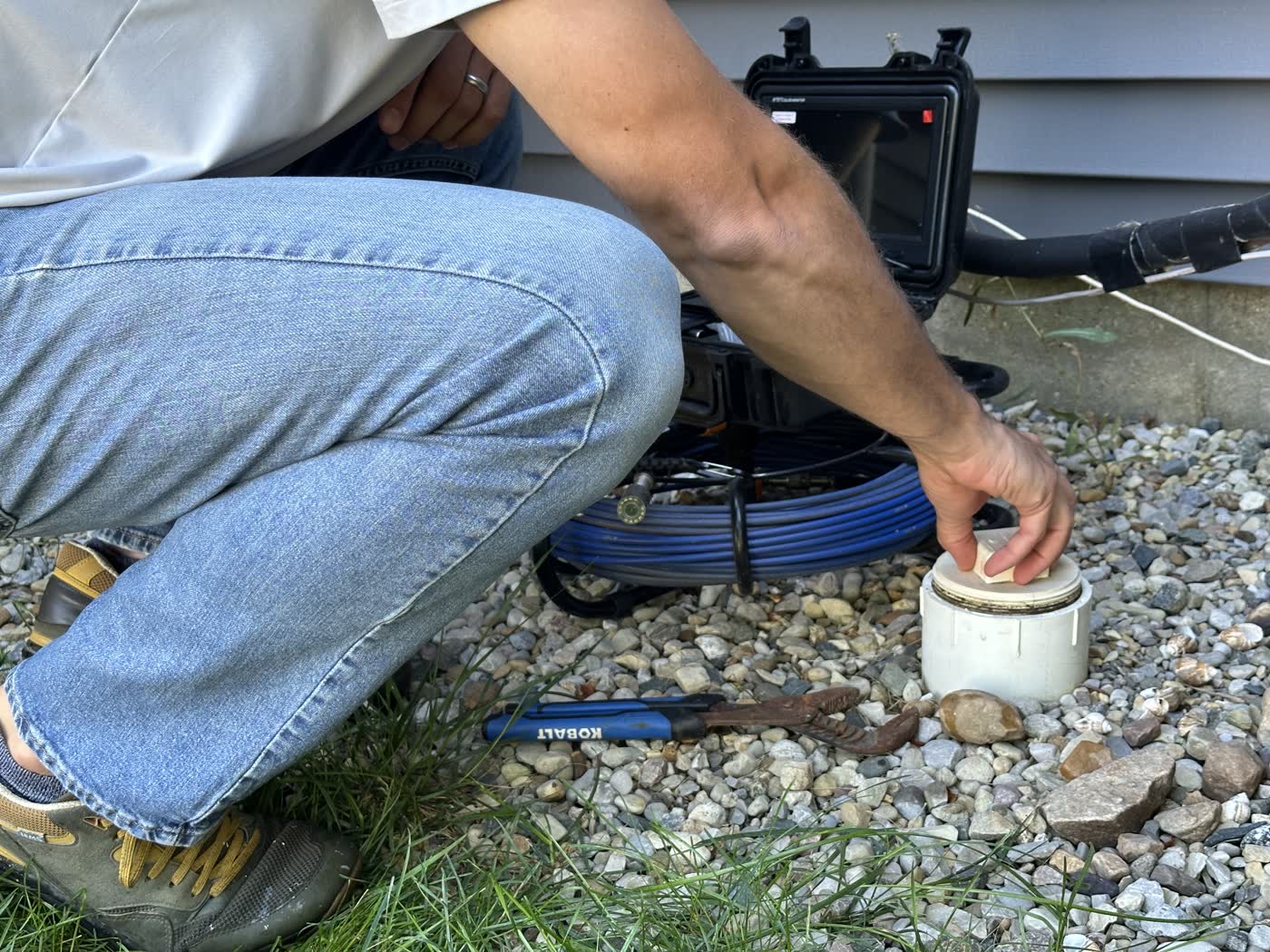
The pattern in Hamilton County is consistent across lenders. ZIPs with high pre-1900 and pre-1980 housing-stock concentration see scope overlays most often. Lenders with prior claim history in these specific areas formalize the overlay into underwriting. Cincinnati ZIPs where overlays show up frequently:
Butler County (45069 West Chester, 45011 Hamilton OH, 45014 Fairfield) and Warren County (45040 Mason, 45036 Lebanon, 45140 Loveland) tend to see overlays less often because their housing stock skews newer. Use our Cincinnati ZIP risk lookup to check a specific address before scheduling.
FHA does require septic inspection on properties served by septic systems rather than city sewer. The Cincinnati metro has more septic homes than most buyers realize. Outer Warren County townships (parts of Salem, Hamilton, Wayne, and Massie townships) still see septic service. Outer Butler County townships (Milford, Wayne, Hanover) have substantial septic acreage. Even some Hamilton County fringe areas (Anderson Township outer edges, Crosby Township, Whitewater Township) carry septic systems.
FHA septic rules require a system that is safe, sanitary, and meets local code. The appraiser flags any visible failure (lawn depressions over the leach field, sewage smell, surface seepage) and the lender may require a separate septic inspection. FHA also enforces distance separation rules: minimum 50 feet between a private well and the septic tank, and 100 feet between the well and the absorption field (per FHA News Blog's distance requirements). Local Ohio jurisdictions can impose stricter rules; FHA accepts whichever rule is more conservative.
Ohio plumbing work is governed by the Ohio Plumbing Code adopted through the Ohio Board of Building Standards under the Ohio Department of Commerce. The Ohio Department of Health publishes residential sewage rules under Ohio Administrative Code Chapter 3701-29 that govern septic system design, installation, and operation across the state (per Ohio Department of Health). Cincinnati-specific lateral work falls under Cincinnati MSD's service-line requirements and the local building department permit (Cincinnati MSD).
1. Property age, pre-1980. Cincinnati lenders with claim history in Hamilton County's pre-1980 housing stock often add a scope requirement for any property built before 1980. The threshold catches almost every pre-1900 urban core, pre-WWII streetcar suburb, and Orangeburg-era postwar ranch home in the metro.
2. ZIP risk overlay. Lenders with prior claim history in specific Hamilton County ZIPs sometimes apply ZIP-based overlays even when individual property age is mixed. The eight ZIPs listed above are the most common trigger ZIPs in Cincinnati. Pre-1900 Over-the-Rhine (45202) and West End fringe (45203) carry the most aggressive overlay patterns.
3. FHA appraiser flag. If the FHA appraiser flags visible failure (lawn depressions, sewage smell, backup history), the lender will typically require a scope or a plumber's letter before clearing the loan to close. The FHA appraiser is not running the scope; they are flagging the trigger. Cincinnati floodplain neighborhoods see more appraiser flags because surface saturation makes lateral failure visible at grade.
4. Title or seller-disclosure flag. If the seller's Ohio Residential Property Disclosure (Ohio Revised Code 5302.30) mentions prior sewer work, a lender may want a current scope to confirm the repair held. Common in Hamilton County estate sales where the original owner's plumbing history is partial or undocumented.
None of these triggers are FHA baseline. All of them are lender business decisions on top of FHA baseline. The buyer's loan officer is the authoritative source for any lender-specific overlay. The right week-one question is "will your underwriting add a sewer scope overlay for this property?" If the answer is yes, schedule the scope on day one of the inspection window.
VA loans (Department of Veterans Affairs) and USDA Rural Development loans both require an appraiser-conducted property condition assessment. Neither requires a sewer scope at the baseline. Both require septic inspection for properties on septic and both apply distance separation rules between septic and well. Lender overlays apply to VA and USDA the same way they apply to FHA.
Cincinnati-area VA buyers tend to see scope overlays more often than national VA averages because Hamilton County's pre-1980 housing concentration drives lender risk. USDA Rural Development loans, by virtue of their rural property focus, see septic inspection more often than scope in the outer Warren and Butler county townships where USDA financing is most common.
Conventional loans (Fannie Mae, Freddie Mac) have no government-mandated scope requirement. The Cincinnati lender sets the policy. Buyer-paid sewer scope inspections on conventional loans are entirely optional from the lender's perspective and entirely advisable from the buyer's perspective for any pre-1980 Hamilton County home (and any pre-1900 Over-the-Rhine or West End property).
Real questions Cincinnati buyers, agents, and loan officers ask Google about FHA, lender overlays, and sewer scope requirements.
No, not on properties connected to MSD city sewer. The FHA appraiser flags visible plumbing failure but does not require a buried-lateral camera inspection. Individual Cincinnati lenders frequently add overlays on top of FHA baseline based on property age, ZIP risk, or appraiser observations.
Source: FHA News Blog · FHA.comPre-1980 housing-stock ZIPs see lender overlays most frequently: 45202 Downtown, 45203 West End fringe, 45205 West Price Hill, 45206 Walnut Hills, 45208 Hyde Park / Mt. Lookout, 45226 California / East End, 45227 Madisonville / Mariemont fringe, and 45236 Kenwood. Butler and Warren county subdivisions see overlays less often. Lender policy varies by institution; ask the loan officer in week one of the inspection period.
Source: Mariemont reference · FHA.comYes. Many outer Warren County townships and parts of Butler County are on septic systems rather than Cincinnati MSD city sewer. FHA requires septic inspection on those properties with specific distance separation rules: minimum 50 feet between a private well and the septic tank, and 100 feet between the well and the absorption field. Ohio Administrative Code Chapter 3701-29 (Ohio Department of Health) governs septic system design, installation, and operation. Local jurisdictions can impose stricter rules.
Source: FHA News Blog · Ohio Department of HealthYes. Cincinnati lenders frequently add scope overlays based on property age, ZIP risk, prior claim history, or appraiser observations. None of these triggers are FHA baseline. All of them are lender business decisions on top of FHA baseline. The buyer's loan officer is the authoritative source for any lender-specific overlay.
Source: FHA.comOhio plumbing work is governed by the Ohio Plumbing Code adopted through the Ohio Board of Building Standards. The Ohio Department of Commerce Division of Industrial Compliance administers Ohio Plumbing Code enforcement. Cincinnati-specific lateral work falls under Cincinnati MSD's service-line requirements and the local building department permit. Ohio Revised Code 5302.30 governs the Residential Property Disclosure that attaches to every Ohio residential closing.
Source: Ohio Department of Commerce · Ohio Revised Code 5302.30 · Cincinnati MSDHamilton / Butler / Warren specifics. Housing-era risk by ZIP. Cincinnati defect prevalence.
Hamilton County specifics, Cincinnati MSD permit context, pay-after-inspection billing. $200 to $300 typical.
Pre-1900 Over-the-Rhine, Hyde Park cast iron, Madeira Orangeburg, hillside risk, real Cincinnati repair costs.
Looking for the national FHA guide? National FHA guide →