
A Cincinnati sewer scope runs a high-resolution camera from a cleanout through the sewer lateral out to the Metropolitan Sewer District (MSD) tap. The Cincinnati-specific concern: more than half the homes selling in the metro were built before 1980, and Over-the-Rhine and West End stock is pre-1900. Lines that age can carry defects like Orangeburg pipe, deteriorated cast iron, or aging clay tile that a standard home inspection does not show. A sewer camera inspection gives buyers a clear look underground before closing.
Hamilton County's housing stock was built in three distinct waves, and each one produces different findings on camera. The urban core (Over-the-Rhine, West End, Mt. Auburn, Walnut Hills, parts of Avondale) is largely pre-1900, with original clay tile laterals or early cast iron mains that have seen 120+ years of pressure. The streetcar-era residential belts (Hyde Park, Mt. Lookout, Clifton, Westwood, Norwood, Pleasant Ridge) ran from the 1890s through the 1940s. Mariemont was platted in 1923 as one of the country's earliest planned communities and most original Tudor-revival homes still stand (Wikipedia: Mariemont, Ohio). The post-war ranch and split-level belts (Madeira, Kenwood, Anderson Township, Finneytown, parts of Springdale and Forest Park) built out heavily between 1945 and 1972, which puts them squarely in the Orangeburg pipe window (per Wikipedia's Orangeburg reference).
Hamilton County's pre-1980 share is meaningfully higher than U.S. average; Butler and Warren county subdivisions (Mason, West Chester, Liberty Township) skew post-1990 with PVC laterals (U.S. Census: Hamilton County). That distribution matters because the defects vary by era. A 1928 Hyde Park bungalow with mature silver maples in the yard is a textbook root-intrusion case study. A 1962 Madeira ranch likely has Orangeburg pipe at or past its 50-year useful life. A 1985 Anderson Township colonial has cast iron at the 25-year deterioration mark with light scaling. A 2008 Mason colonial has PVC with mid-life root risk at joints. One inspection product, four different findings, four different repair conversations.
Cincinnati sewer scope specialists who know the metro adjust the report to the era. Brandon and the local Cincinnati Sewer Scope team run scopes across all four eras every week. The defect taxonomy on this page is what the camera actually finds in Cincinnati housing stock.
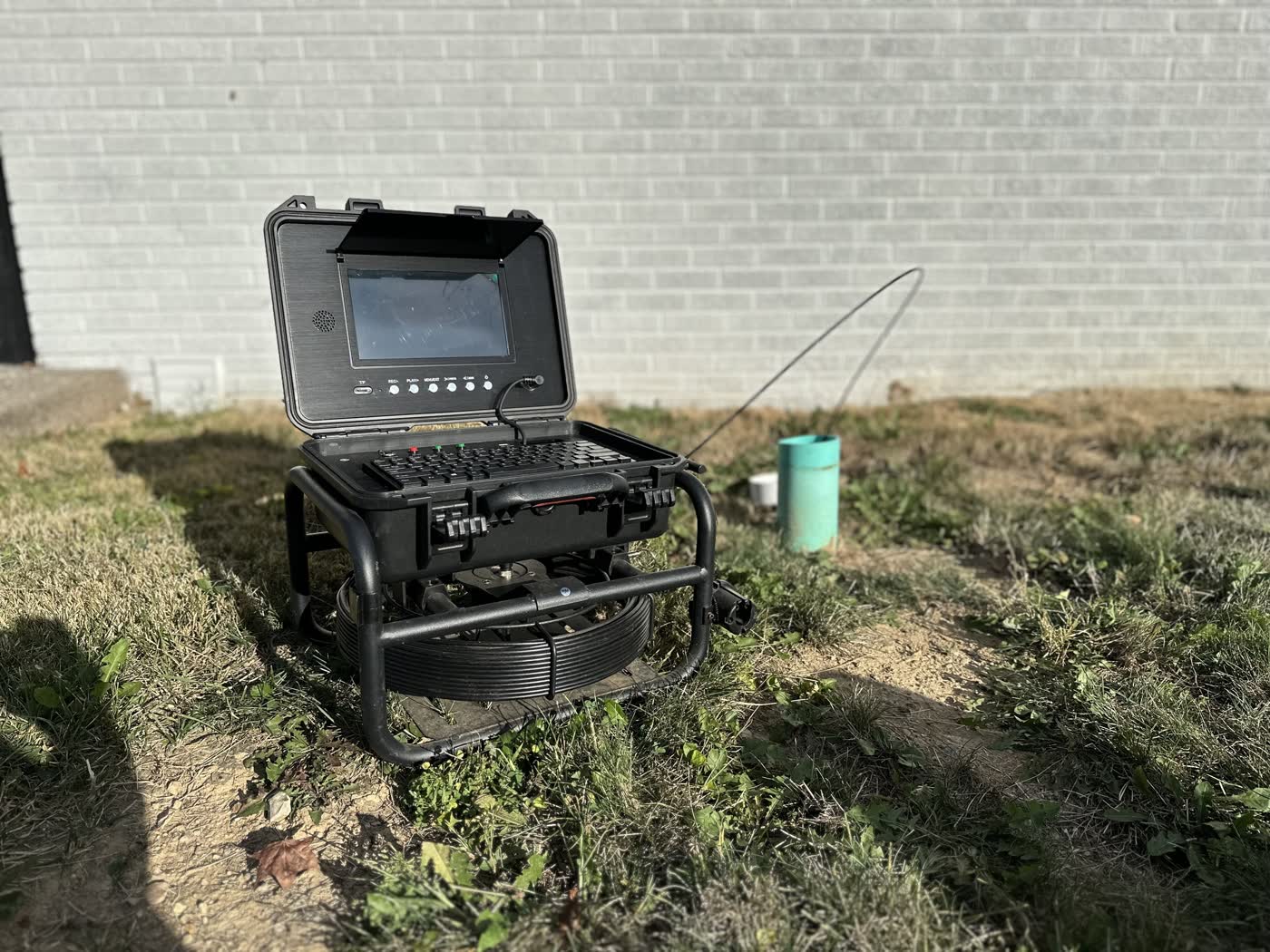
This is the line most buyers do not know until they get the first repair quote. In Hamilton County and the city of Cincinnati, the homeowner owns the sewer lateral from the foundation to the point where it connects to the Cincinnati Metropolitan Sewer District (MSD) main. MSD administers the public sanitary sewer system across the county and handles the main line. That means the homeowner pays for lateral repairs, replacement, root intrusion clearing, and city-tap repairs (per Cincinnati MSD).
Greater Cincinnati Water Works runs the water service line separately, so a sewer-lateral repair does not automatically pull the water connection (Greater Cincinnati Water Works). Hamilton County government and the local building department coordinate permitting on the property side; MSD coordinates the tap-side connection (Hamilton County). Lateral work requires an MSD permit and a Cincinnati-registered, insured, and bonded contractor.
The "homeowner owns it" rule changes the cost-benefit calculation on a $200 sewer scope. The scope is the only product in pre-purchase due diligence that lets the buyer surface a defect on something they are about to own, while the deal is still negotiable under the Ohio Residential Property Disclosure regime (Ohio Revised Code 5302.30). After closing, a failed lateral is the new owner's problem. Before closing, it is a price negotiation.
1. Orangeburg pipe. Most prevalent in 45236 Kenwood, 45230 Mt. Washington / Anderson Township edge, 45237 Roselawn / Bond Hill, plus the post-WWII Madeira and Finneytown stock. The pipe is bituminized fiber (wood pulp sealed with coal tar pitch) with a 50-year useful life that almost every Hamilton County install has now exceeded. On camera: rough, corrugated, dark brown to black, often deformed (per Structure Tech's field guide). Repair is full replacement.
2. Cast iron scale. Endemic across pre-1980 Hamilton County housing. Cast iron mains last 50 to 100 years but begin deteriorating after 25 years (per Balkan Plumbing's lifespan reference). Cincinnati's clay and shale soils accelerate corrosion, particularly in the hillside neighborhoods (Mt. Adams, Clifton, Mt. Auburn, Price Hill) where drainage stacks combine with age. On camera: jagged rust-colored buildup narrowing the pipe diameter. Repair is hydro-jetting plus mechanical chain descaling.
3. Root intrusion. Silver maple, Norway maple, surviving American elms, willow, and poplar are the Cincinnati offenders. Roots cause more than 50% of all sewer blockages (per ARS Rescue Rooter's reference). On camera: white hair-like or rope-like masses growing into the line from joints. Hyde Park, Mt. Lookout, and Mariemont bungalow lots from the 1900s through 1930s have mature canopy within 30 feet of laterals. Repair ranges from $1,500 to $5,000 for trenchless lining of recurring intrusion zones.
4. Bellies. Cincinnati clay-and-shale soils plus freeze-thaw cycles make bellies common in older laterals. The pipe sags below grade and waste pools at the low point. The Mill Creek and Ohio River floodplain neighborhoods (Lower Price Hill, Queensgate, Camp Washington, California / East End) carry elevated belly risk. Repair runs $1,500 to $4,500 (per Angi Cincinnati).
5. Offsets at joints. Pipe sections shifted by ground movement or root pressure. Common in pre-1940 Cincinnati clay tile and post-war Orangeburg installs. Cincinnati's hillside neighborhoods see additional grade-driven offset risk. Repair is trenchless lining ($1,500 to $4,000) or excavation ($1,800 to $4,500). Full defect taxonomy in our Cincinnati defect prevalence guide.
The standard Cincinnati residential scope runs 30 to 60 minutes from arrival to camera packed. Alpha Environmental's industry duration reference puts the average residential scope at the same 30 to 60 minute mark nationally (per Alpha Environmental's duration reference). What lengthens a Cincinnati scope: no accessible cleanout (the inspector pulls a toilet, then resets, especially common in pre-1900 Over-the-Rhine and West End buildings), hillside laterals running long downhill grade in Mt. Adams or Clifton, or a buyer who wants the operator to walk through the live feed in detail.
The Cincinnati Sewer Scope report turnaround is roughly 24 hours from camera-back-in-the-truck. The platform we operate on packages the video plus PDF and sends one shareable link to the buyer, the buyer's agent, and the home inspector if they were on site. We never bid the repair.
Booking is same-week standard. Call (513) 201-8833 or use the Cincinnati booking widget. With pay-after-inspection billing, the invoice is sent after the inspection. No cash event on inspection day.
The Cincinnati market has dozens of plumbing companies that will run a sewer scope, and many of them will run it for less than $200. The math on cheap plumber scopes only works one way: the scope is a lead generator for repair work. The plumber finds the defect on camera, then bids the fix. The buyer cannot evaluate whether the offset at 41 feet is a $3,000 trenchless lining or a $9,000 dig-and-replace until they ask a second plumber.
InterNACHI's published standards for sewer scope inspection emphasize the same point: the inspection should be performed by someone whose only product is the report (per InterNACHI's sewer scope standards). Pillar To Post, one of the largest national home inspection franchises, markets scope as a specialist add-on rather than a repair lead-in (per Pillar To Post's specialist position). ASHI Standards of Practice push the same direction for any inspection-adjacent service.
At Cincinnati Sewer Scope the specialist standard is the entire business model. Brandon and the local Cincinnati team run the camera. We do not bid repairs. We do not bid the fix. That is the alignment buyers, sellers, and CABR-member realtors trust when they recommend a vendor.
Questions buyers and agents actually ask about sewer scopes in Hamilton, Butler, and Warren counties.
A video examination of the sewer lateral connecting a Cincinnati home to the Cincinnati MSD main, performed by feeding a flexible high-resolution camera into the line through a cleanout. The Cincinnati-specific concern: more than half of Hamilton County homes built before 1980 have Orangeburg pipe, scaled-up cast iron mains, or aging clay tile laterals, none of which are visible during a standard home inspection. Over-the-Rhine and West End buildings are pre-1900 with materials older still.
Source: Rocket Mortgage · SpectoraIn Hamilton County and the city of Cincinnati, the homeowner owns the lateral from the foundation to the point where it connects to the Cincinnati MSD main. MSD handles the main line. Greater Cincinnati Water Works runs the water service separately. Lateral work requires an MSD permit and a Cincinnati-registered, insured, and bonded contractor.
Source: Cincinnati MSD · Greater Cincinnati Water Works · Hamilton CountyA typical Hamilton County residential sewer scope takes 30 to 60 minutes on site, with the camera run itself running 20 to 30 minutes. Pre-1900 Over-the-Rhine and West End buildings can take longer if there is no accessible cleanout and the inspector has to pull a toilet. Hillside laterals in Mt. Adams or Clifton add time on long downhill runs.
Source: Alpha Environmental · Total Home InspectionCincinnati area sewer scope inspections typically run $200 to $300. Cincinnati Sewer Scope starts at $200. Paid after the inspection. Full breakdown in our Cincinnati cost guide.
Source: AngiFor any Hamilton, Butler, or Warren county home built before 1980, yes. Pre-1972 builds frequently have Orangeburg laterals at or past 50-year useful life. Pre-1980 cast iron mains are mid-life and scaling. Over-the-Rhine and West End buildings are pre-1900 with clay tile or first-generation cast iron. All are invisible to a standard home inspection. The same buyer-due-diligence framing applies in Cincinnati as nationally: a scope is the buyer's best low-cost defense against post-closing repair surprises.
Source: Three Lakes Association of Realtors framing · InterNACHIOrangeburg pipe (1945 to 1972 builds), cast iron scale (pre-1980 builds), root intrusion (silver maple and Norway maple are the local headline offenders), bellies (clay-and-shale soil plus freeze-thaw driven, elevated in Mill Creek and Ohio River floodplain neighborhoods), offset joints, cracks, and city-tap separation. Full Cincinnati defect prevalence in our prevalence guide.
Source: ARS Rescue Rooter · Wikipedia OrangeburgHamilton County specifics, Cincinnati MSD permit context, pay-after-inspection billing. $200 to $300 typical.
ZIP-by-ZIP overlay pattern across Hamilton, Butler, Warren counties. Septic homes in outer townships.
Pre-1900 Over-the-Rhine clay tile, Hyde Park cast iron, Madeira Orangeburg, hillside offset risk, real Cincinnati repair costs.
Looking for the national pillar version of this guide? National pillar: What is a sewer scope inspection →