● Denver · Front Range corridor ← Sewer Scope network
FRONT RANGE · SSU Network|★★★★★ 5.0 ★ · 2 verified Front Range Google reviews | Same-week scheduling · Mon-Fri 7a-7p MT · Sat 8a-4p | (720) 239-2322
Front Range Sewer Scope (Sewer Scope Denver)
Sewer Scope · Denver · Front Range Sewer Scope

The Denver sewer specialist.

Denver sits on bentonite-rich expansive clay at 5,280 feet, with more than 90 freeze-thaw cycles a year. Two soil-and-altitude factors that physically move sewer laterals in ways the lower-elevation Midwest never sees. Capitol Hill, Park Hill, Berkeley, and Wash Park homes from the 1890s through 1940s sit on top of those forces with cast iron and clay tile underneath. We catch the damage on camera in about 25 minutes, before the deal is signed.

★★★★★ 5.0 · 2 reviews · Front Range6 counties · same-week
Call now · (720) 239-2322
● Fast online booking

Book your sewer scope

Enter ZIP · pick a time · done
  • Pay after inspection — no deposit
  • Clear video + written report in under 24 hours
  • No repair quote, no upsell — ever

Prefer to talk? Find your local office →

● Real footage, every job

See exactly what we see.

Every scope is recorded from the cleanout to the city tap. You get the full, unedited video — the same footage we review — plus a plain-English written report. Nothing hidden. No spin. No repair pitch.

Book your scope →
Live footageCleanout → city tap
★★★★★
5.0/ 2 reviews
Denver · Google
GF
"Highly recommended."
Garth Fisher · 2 reviews · Google, 2 weeks ago
BG
"Shaun provided outstanding service when we needed a sewer scope completed. Working within a tight timeline. Strong recommend."
Ben Gippert · Local Guide, 28 reviews, 1 photo · Google, 2 weeks ago
View Denver GBP →
Denver address risk lookup

Is your home in a Front Range sewer-risk ZIP?

Denver ZIPs split sharply by era and soil. Capitol Hill (80218), Park Hill (80205, 80207), Berkeley (80211), and Wash Park (80209) sit on pre-1940 stock plus expansive bentonite clay. Central Park (former Stapleton, 80238), Highlands Ranch (80129), and Lone Tree (80124) are post-2000 PVC. Type your ZIP. We tell you what is likely under the yard.

What is under the yard at your Denver address?

Our Front Range risk model uses housing-stock era from the Denver Office of Community Planning plus the Colorado Geological Survey expansive-soil hazard maps. Each result links sources so you can verify.

Defect dictionary

Seven things the camera finds on the Front Range.

Real defects, real Denver repair costs, real sources. The two top of the list (expansive-soil heaving and altitude freeze-thaw) are Front Range specific. Click any card for the plain-English version your buyer can show their plumber.

EXP

Expansive-soil heaving

Bentonite clay · Front Range only · differential lateral movement
+
What it is
Bentonite and montmorillonite clay in Front Range soils expand when wet and contract when dry. Sewer laterals buried in this soil get pushed up, dragged down, and twisted across the seasons. The Colorado Geological Survey maps the hazard from foothills through central Denver as moderate to high across most pre-1980 housing tracts.
Why it fails
Movement is differential. One stretch of lateral heaves while the next stretch settles, opening offsets at every joint. Clay tile and cast iron from the 1890s through 1940s laterals were never designed for the load. PVC handles the movement better but flexible couplings still drift apart at heaved joints.
On camera
Step-jogs at joints where two sections sit at different heights. Pipe sections rotated out of round. Roots and waste accumulating at every step. Often paired with bellies further down the run.
Denver repair cost
Joint trenchless lining $1,500 to $4,000. Excavation repair $50 to $250 per linear foot in the Denver metro. Total replacement of a heaved-out 1920s clay tile lateral $1,500 to $5,000 depending on length and street tear-up.
F/T

Altitude freeze-thaw cracking

90+ cycles/year at 5,280 ft
+
What it is
Denver records more than 90 freeze-thaw cycles a year at 5,280 feet, compared with roughly 50 at lower elevations in the Midwest. Diurnal swings of 40 to 60 degrees in winter and shoulder seasons drive water in and out of pipe seams faster than at sea level.
Why it fails
Frost penetration in the Front Range averages 36 to 48 inches in the metro and deeper at higher elevations. Sewer laterals are buried at variable depth and frost reaches part of the run on most pre-1970 installs. Each freeze cycle pushes a hairline crack open another fraction of a millimeter. After 100 winters, what started as a manufacturing flaw is a fracture.
On camera
Longitudinal cracks running the length of the pipe. Transverse fractures across the pipe. Hairline patterns radiating from joints. Visible water seepage in cold months.
Denver repair cost
Trenchless CIPP lining $1,500 to $4,000 in the Denver metro. Spot excavation repair varies widely with depth. Hairline cracks are re-scoped in 2 to 3 years on the Front Range because freeze-thaw cycling is faster than the Midwest baseline.
CI

Cast iron scale

50 to 100 yr lifespan · Capitol Hill + Park Hill pre-1900 endemic
+
What it is
Rust, mineral, and waste residue building up inside cast iron pipe walls. Reduces pipe diameter and traps debris.
Why it fails
Cast iron lifespan is 50 to 100 years. Deterioration commonly begins after 25. Capitol Hill, Park Hill, Berkeley, and Five Points carry housing stock built 1880s through 1920s, which means cast iron mains in those neighborhoods are at or past the upper end of useful life. Denver soils with bentonite clay also retain moisture that accelerates exterior corrosion.
On camera
Diameter visibly narrowed by 30 to 60 percent. Pipe bottom rusted through (channeling). Surface looks like rough orange-brown moonscape.
Denver repair cost
Descaling alone $200 to $800 in Denver. Restores diameter, extends life decades. Full cast iron replacement $4,000 to $15,000 on a typical Capitol Hill lateral including any sidewalk and street restoration.
ROOT

Root intrusion (Front Range species)

Siberian elm, cottonwood, Russian olive · not silver maple
+
What it is
Tree roots invading the sewer line through joints or cracks, drawn by moisture and nutrients inside the pipe. Roots cause more than 50 percent of all sewer blockages nationally.
Front Range headline trees
Siberian elm is the Denver lateral wrecker, especially in older alleys across Capitol Hill, Cheesman Park, and Park Hill. Plains cottonwood along the South Platte corridor and through Wash Park is the second-most-common offender. Russian olive and silver poplar round out the top list. Silver maple, the Indianapolis problem tree, is much less common in Denver because it prefers wetter Midwest soils. (Colorado State Forest Service tracks species presence by county.)
On camera
Fine hair-roots or thick rope-roots entering at joints. Clay tile and cast iron joints most susceptible. PVC slip-couplings still vulnerable, especially where soil heave has pulled them apart.
Denver repair cost
Hydro-jetting for clearing $350 to $600 in Denver. Root foaming $150 to $400. Joint repair or lining $1,500 to $4,000 depending on number of intrusions.
BLY

Belly (sagging line)

Differential settlement in expansive soil
+
What it is
A low spot in the lateral where the pipe has sagged. Water and waste pool at the dip, building blockages over time.
Why it fails
In the Denver metro the cause is rarely poor original compaction. The cause is differential settlement in expansive bentonite soil. One section of the trench dries and contracts while the adjacent section stays wet and expands. The pipe sags. Add 90 freeze-thaw cycles a year and the sag deepens faster than at lower altitudes.
On camera
Pipe dips down then back up. Water or waste pools visible in the low section. The camera floats through standing water. Often pairs with offsets and heaved joints upstream.
Denver repair cost
Belly repair $1,500 to $4,500 in Denver. Full replacement of the belly section $1,500 to $4,500 depending on depth and access. Trenchless cannot fix a sagged grade, so excavation is the standard. Higher cost than Indianapolis or Cincinnati because labor and street-restoration rates run higher on the Front Range.
OFF

Offset joint

Heave-driven, not just settling
+
What it is
Two pipe sections shifted out of alignment at the joint, leaving a step where waste catches and roots find entry.
Why it fails
On the Front Range, the dominant driver is expansive-soil heave, not the gradual settling that drives offsets at lower elevations. Bentonite clay can lift a section of pipe two to four inches across a wet-dry cycle. Two adjacent sections move different amounts. The joint between them opens. Frost penetration to 48 inches in cold winters finishes the displacement.
On camera
Pipe diameter appears to step or jog where it should be smooth. Buildup or roots almost always present at the offset. In Capitol Hill and Park Hill stock from the 1890s through 1920s, offsets line up with the foundation perimeter where soil moisture content changes most.
Denver repair cost
Trenchless lining $1,500 to $4,000. Traditional excavation repair $50 to $250 per linear foot. Typical Denver offset repair $1,500 to $4,000.
CTY

City-tap separation

Where lateral meets Denver wastewater main
+
What it is
A break or separation right where the homeowner lateral connects to the city main. Often missed by buyer plumbers because they stop short.
Why it matters in Denver
Denver homeowners own the lateral from house to the city main connection. Denver Department of Transportation and Infrastructure (formerly Public Works) handles the main itself. Metro Wastewater Reclamation District treats the flow further downstream. The homeowner pays for any lateral repair, including the tap-side connection. We push the camera all the way to the tap so the connection is visible, not just the lateral middle.
Denver tap + permit context
Denver sanitary sewer system development charge (the connection-tap fee) is published on the Denver DOTI fee schedule and varies by service size. Permit fees and contractor licensing requirements are also Denver DOTI. Verify current fees with Denver DOTI (TBD · numbers placeholder, confirm with Denver DOTI before any client quote). Contractor must be Denver-licensed and bonded.
Denver repair cost
Tap repair $2,000 to $6,000 in the Denver metro depending on excavation depth, street tear-up, and traffic-control requirements. Significantly more if the connection sits under a Denver arterial or a Lakewood / Aurora collector road.
Why Denver

The Front Range housing and soil profile that makes a scope worth ordering.

Per Patrick Grayson, Denver is the largest sewer-scope demand market in the Sewer Scope network. The reason is a soil-and-stock pairing the Midwest does not have. Three structural factors stack the demand.

  • expansive soil Bentonite + montmorillonite clay. Front Range soil expands when wet and contracts when dry. The Colorado Geological Survey hazard maps moderate-to-high across most of the Denver metro. Laterals move differentially. Offsets, bellies, and joint separations show up at rates no Midwest metro records.
  • 90+ F/T Altitude freeze-thaw. Denver at 5,280 feet records more than 90 freeze-thaw cycles a year, roughly double the Indianapolis baseline. Every cycle opens hairline cracks a fraction wider. Cast iron and clay tile from the 1880s through 1940s have absorbed 100+ winters of that cycling.
  • pre-1940 core Mature housing stock. Capitol Hill, Park Hill, Berkeley, Wash Park, University Park, and Cherry Creek carry housing built 1880s through 1940s. Original laterals were cast iron and vitrified clay tile. Central Park (former Stapleton), Highlands Ranch, and Lone Tree are post-2000 PVC and a different conversation.

None of the three shows up on a standard buyer home inspection. None shows up in the Colorado Seller's Property Disclosure (form SPD19-5-09) if the seller does not know. All three are catchable from a camera at the cleanout in about 25 minutes, before the deal is signed (Colorado Real Estate Commission).

How a Denver inspection runs

120 feet of pipe. About an hour on the property.

0 ft · cleanout
30 ft
60 ft
90 ft
120 ft · Denver tap
01 / LOCATE

Find the access

Cleanout, code-approved access point, or pulled toilet. Pre-1920 Capitol Hill and Five Points brownstones sometimes lack an exterior cleanout. We tell you before we start.

02 / RUN

Camera to the tap

High-resolution camera advances from cleanout through the lateral to the Denver wastewater main. Heaved sections flagged in real time.

03 / MARK

Document each finding

Video plus video capture of every finding: expansive-soil heaving, freeze-thaw cracks, cast iron scale, Siberian elm root intrusion, bellies, offsets, tap separations.

04 / DELIVER

Quick turnaround reports

The report and shareable video go directly to you, the customer. You can pass them along to your agent, lender, plumber, or anyone else, exactly as you see fit.

What every Denver scope produces

Three artifacts. Hand them off and close the deal.

Same professional report and high quality video format as every other Sewer Scope metro. Front Range Sewer Scope, Denver local brand inside the network, uses the same standardized output. Standardized reporting is the whole point of the franchise.

MP4

HD scope footage

Full-resolution video, cleanout to Denver wastewater tap. Shareable link. No app, no login required for the recipient.

PDF

Simple, professional report

1-page summary, video capture of every finding (heaving, cracks, scale, Siberian elm roots, bellies, offsets, tap separations). An easy-to-read report you can use for disclosures, negotiating, or getting repair quotes.

$0

Zero repair quote

Front Range Sewer Scope is not a Denver plumber. We do not bid the fix. The report is the report. The buyer plumber (or any Denver plumber the buyer picks) bids the repair on whatever timeline the closing allows.

For Denver realtors

Built for the DMAR agent ordering scope #60 this year.

Roughly seven of every ten Denver jobs come in through a realtor. Denver Metro Association of Realtors (DMAR) members and REcolorado MLS users do not need our brochure. They need vendors they can count on who stay out of the buyer-plumber upsell lane.

01

Schedule inside the Earnest Money objection window

Same-week appointment standard. Colorado contracts run on Earnest Money Deadlines and Inspection Objection Deadlines (not the inspection period model some other states use). The buyer inspector receives the link the moment we ship the file.

02

Pay after inspection

As soon as the report is ready, the invoice is sent and the report is automatically emailed. Buyers do not write a check on the porch. Removes a friction the buyer plumber still imposes.

03

Pre-sale scope

About 80% of our inspections turn up some deferred maintenance on the sewer line. Knowing that before you list can be a real advantage in negotiations, and it helps the buyer avoid any unwanted (and sinky) surprises after closing.

Real questions Denver buyers and realtors ask Google

Plain-English answers, sourced.

What is a sewer scope inspection and how does it work?

A sewer scope inspection sends a small high-resolution camera through your home sewer lateral, from the cleanout all the way to where your line meets the Denver wastewater main. The technician records video and stills of every defect (heaved offsets, freeze-thaw cracks, cast iron scale, Siberian elm root intrusion, bellies, tap separations) along the entire run. The output is video plus a written report with footage notation.

Source: Rocket Mortgage · Spectora
How much does a sewer scope inspection cost in Denver?

Denver sewer scope inspections typically run $299 to $400 at specialty providers. Bundled with a full home inspection, expect $150 to $250 added to the base. Front Range Sewer Scope (Sewer Scope Denver) starts at $299. You pay after the inspection — no deposit and no upfront payment. Denver labor rates run higher than Indianapolis or Cincinnati, which is reflected in the starting price.

Source: Angi national
How long does a Denver sewer inspection take?

About 25 minutes on site for a typical Front Range residential lateral. Report delivery is under 24 hours, with most reports inside 12. Factors that can extend on-site time include hard-to-find cleanouts (common in pre-1920 Capitol Hill brownstones), heaved sections that require slow camera advance through offsets, and bellies that pool water and slow the camera. Heaved Front Range laterals are slower to scope than flat Midwest installs because the camera has to navigate step-jogs at heaved joints.

Source: Alpha Environmental · Total House Inspection
Should I get a sewer scope before buying a Denver house?

Yes for any home in Capitol Hill (80218, 80203), Park Hill (80205, 80207, 80220), Berkeley (80211, 80212), Wash Park (80209), University Park (80210), or any Denver-metro home built before 1980. Three Front Range factors converge in that stock: bentonite expansive soil moving the lateral, 90+ annual freeze-thaw cycles cracking the pipe, and 100+ year old cast iron or clay tile material at or past useful life. Standard buyer home inspections do not include sewer scoping.

Source: NuFlow · Colorado Geological Survey
Does altitude or freeze-thaw really matter for Denver sewer pipe?

Yes. Denver records more than 90 freeze-thaw cycles a year at 5,280 feet versus roughly 50 at Indianapolis altitude. Each cycle opens hairline cracks a fraction wider. Frost penetration on the Front Range averages 36 to 48 inches in the metro. Cast iron laterals in Capitol Hill and Park Hill that started life in the 1890s have absorbed approximately 13,000 freeze-thaw cycles over 130 winters. The Indianapolis equivalent over the same window is closer to 7,500 cycles. That is the structural difference: the same pipe material ages faster on the Front Range.

Source: NOAA Boulder · USGS Colorado
Are sewer scopes required for FHA loans in Colorado?

FHA does not require a sewer scope on homes connected to a public city sewer. The FHA appraiser is required to flag visible signs of failure but is not required to scope the line. However, individual Denver-metro lenders often add a sewer scope condition for homes built before 1980 or in known-issue Front Range ZIPs (80218, 80203, 80205, 80207, 80211, 80209). For homes on septic (rare inside Denver County but common in Douglas, Elbert, and parts of unincorporated Adams), FHA does require a septic system inspection by an approved professional, and minimum-distance requirements apply between well, septic, and property lines.

Source: FHA News Blog · FHA.com
Who should perform a Denver sewer scope inspection?

A trained sewer-scope specialist or a home inspector certified for scope work. The buyer standard home inspector, unless specifically credentialed and equipped, does not include sewer scoping in their default Denver inspection. Many Denver home inspectors subcontract the scope work to a specialist precisely because the equipment, training, and report format are different. The key distinction: the person scoping should not also be the person bidding the repair, since that creates a conflict of interest. Front Range Sewer Scope never bids repairs.

Source: InterNACHI · Pillar To Post
What is the Colorado Seller Property Disclosure form?

Colorado uses the Colorado Real Estate Commission Seller Property Disclosure form SPD19-5-09. Sellers are required to disclose known defects, including known sewer or septic problems. A pre-listing sewer scope gives a Denver seller documented knowledge they can disclose accurately, which is materially better for both the seller and the future buyer than the buyer discovering a heaved or scaled lateral during the Inspection Objection window and demanding a repair credit. Colorado Real Estate Commission publishes the SPD19 form and seller disclosure guidance.

Source: Colorado Real Estate Commission · CREC real estate forms (SPD19)
How long does cast iron sewer pipe last in Denver?

Cast iron sewer pipe has a baseline lifespan of 50 to 100 years. Denver soil and altitude push that to the shorter end. Bentonite clay retains moisture against the pipe exterior, accelerating corrosion. 90+ freeze-thaw cycles a year drive water in and out of any hairline opening. Capitol Hill and Park Hill cast iron laterals from the 1890s through 1920s are at or past useful life today. Descaling can restore diameter and extend life. Full replacement is needed where the pipe bottom has channeled out or where heave-driven offsets have separated joints.

Source: Balkan Plumbing · Colorado Geological Survey
Will I get a repair quote with my Denver sewer scope report?

No. Front Range Sewer Scope (Sewer Scope Denver) is not a plumbing company and we do not sell repairs. The report tells you what is there. Your buyer plumber (or any Denver plumber you choose) bids the fix on whatever timeline the Inspection Objection Deadline allows. The whole reason this works is we have nothing to upsell. The defect dictionary on this page links to Denver cost data so you can sanity-check the bid that comes back.

Source: the repair cost estimator and Denver market data references on this page.
Who owns the sewer line in Denver, me or the city?

In Denver, the homeowner owns the sewer lateral from the foundation to the point where it connects to the city wastewater main. Denver Department of Transportation and Infrastructure (DOTI, formerly Public Works) handles the main itself. Metro Wastewater Reclamation District treats the flow further downstream. The homeowner pays for lateral repairs, replacement, root intrusion clearing, heave-driven offset repair, and any tap-side connection repair. Denver sanitary sewer connection-tap fees and permit costs are published on the Denver DOTI fee schedule (TBD · verify current rates with Denver DOTI before quoting). Contractor must be Denver-licensed and bonded.

Source: Denver DOTI · Metro Wastewater Reclamation District
Book Denver

Pick a window. We confirm by email inside the hour.

Appointments can be made online. Enter your zip code, pick your date, and get your confirmation. Same-week appointments standard across the Front Range corridor: Denver, Aurora, Lakewood, Wheat Ridge, Arvada, Westminster, Thornton, Englewood, Littleton, Centennial, Highlands Ranch, Lone Tree, Cherry Hills Village, Greenwood Village, Castle Rock, Parker.

Real work, real cleanouts

From the field this week.

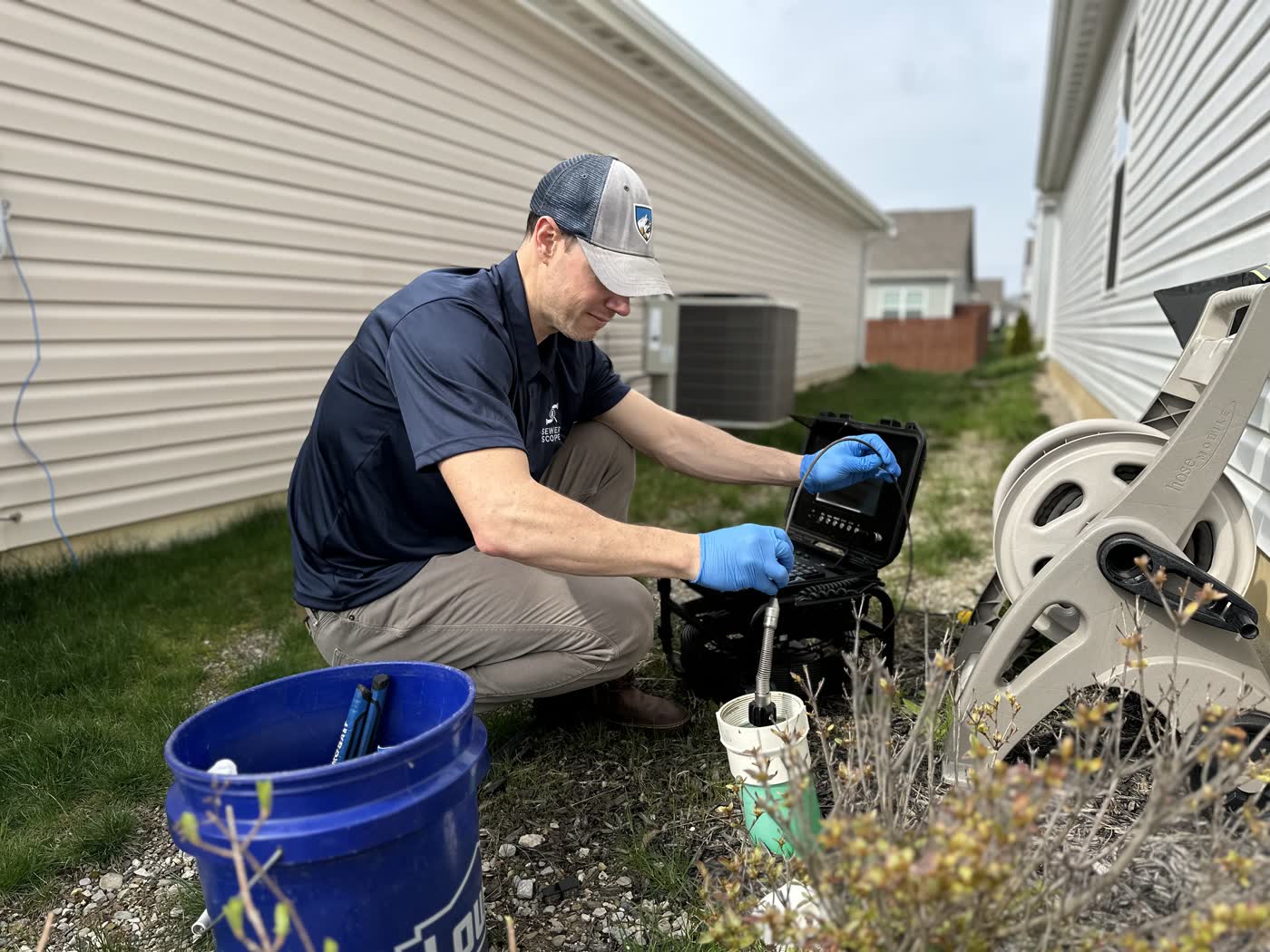
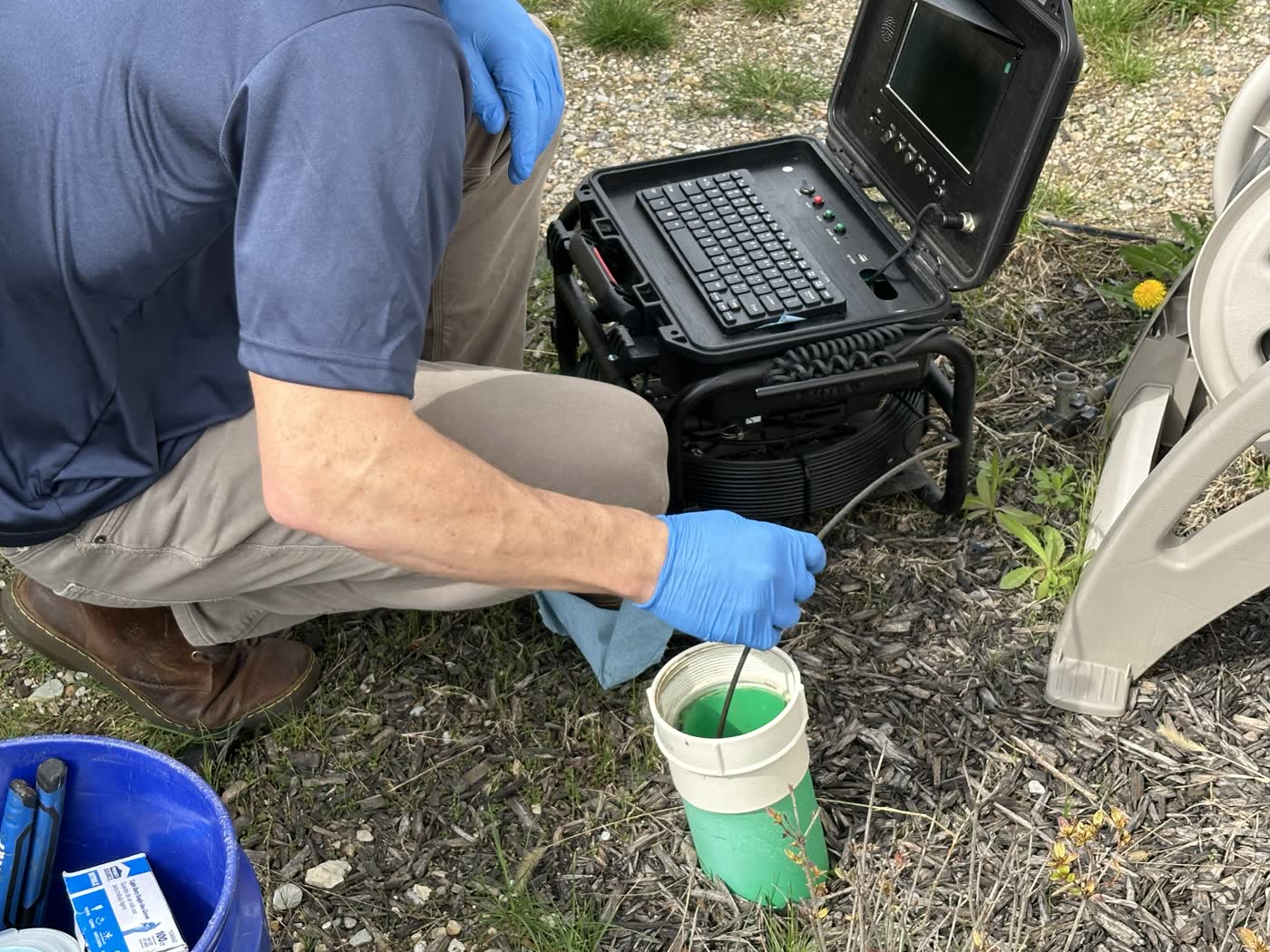
A few frames from recent residential inspections. No staged shots, just the actual on-site flow.
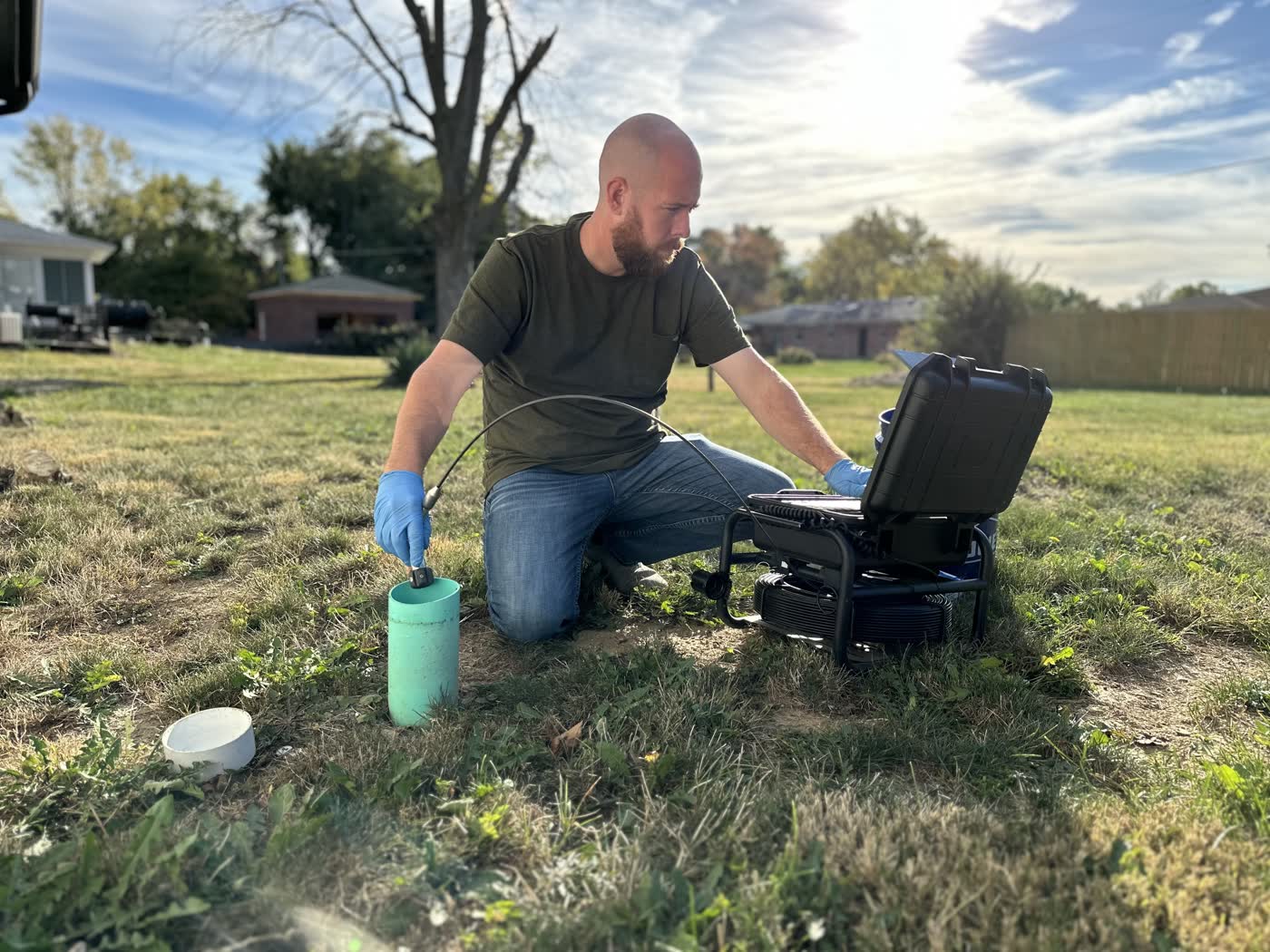
Front Range Sewer Scope operator at a Denver-area cleanout in late afternoon light.
Branded Sewer Scope inspector running the camera at a Denver metro home.
Inspector cleaning the cable line on a Front Range pre-purchase sewer scope.
Book Denver · ~$299