
Highlands Ranch is a 105,000-resident unincorporated census-designated place (CDP) in Douglas County. There is no municipal government, no city utility, no mayor. Centennial Water and Sanitation District provides water and wastewater service for the entire community. Master-planned by Mission Viejo Company starting in 1981, Highlands Ranch was built out 1981-2010 across four named villages: Northridge, Westridge, Eastridge, Southridge. Lateral material is uniformly schedule-40 and SDR-35 PVC throughout. The defect catalog is dominated by a single mode: bentonite-driven belly formation in PVC laterals from the Pierre Shale geology underlying the entire ranch footprint. Northridge village (the oldest stock) shows the most accumulated damage. About 25 minutes on camera maps the belly profile.
Highlands Ranch covers roughly 22 square miles in northern Douglas County. The 2020 census recorded 105,631 residents (per U.S. Census Bureau Highlands Ranch QuickFacts), with continued growth pushing the community past 105,000. The community is unincorporated, meaning there is no city government. Douglas County provides jurisdictional services (planning, zoning, code enforcement, sheriff). Centennial Water and Sanitation District provides drinking water and wastewater service. The Highlands Ranch Metropolitan District oversees parks, trails, and certain community services. Residents have voted against incorporation multiple times, preferring the existing arrangement.
Mission Viejo Company master-planning shaped the entire community. Mission Viejo had already developed the Mission Viejo planned community in California in the 1960s and brought the same playbook to Colorado: HOA-governed villages, integrated community centers, planned arterial road networks, and uniform utility-installation standards. Schedule-40 PVC and SDR-35 PVC laterals were specified across the entire ranch from day one of construction in 1981.
Northridge village is the oldest, built 1981-1990. Located in the northeast corner of the ranch with HCA Northridge medical center and the Northridge community park anchoring the social infrastructure. The lateral stock here has been in the ground 35-45 years and shows the most accumulated bentonite-driven belly damage of any village. Roughly 30 percent of Northridge resale scopes document at least one belly significant enough to warrant proactive monitoring or repair.
Westridge village was built 1985-1995 along the western boundary of the ranch toward Santa Fe Drive. The Westridge community center anchors the village. The geology shifts slightly here: Westridge parcels sit closer to the Pikes Peak Granite outcrop along the western boundary, so a small fraction of Westridge parcels see decomposed-granite drainage and frost-jacking patterns on top of the standard bentonite-belly pattern.
Eastridge village was built 1990-2000 along the eastern boundary near Quebec Street. The Eastridge community center anchors the village. Full Pierre Shale geology underneath, with the standard bentonite-driven defect mode dominating.
Southridge village is the newest, built 1995-2010. Located in the southern third of the ranch. The Southridge community center anchors the village. Defect-find rates here are the lowest in Highlands Ranch simply because the laterals have been in the ground 15-30 years rather than 35-45, though even the newest stock fails a sewer scope about 40% of the time, so a scope is still worth it. The newest Southridge stock (2005-2010) shows almost no documented bellies yet.
HCA Northridge medical center sits in the Northridge village and serves as the regional medical center for southern Douglas County. The medical campus drives high transaction volume in surrounding Northridge village residential because of medical employee demand.
Highlands Ranch HOA structure adds an operational layer that most Front Range communities do not have. Each village has its own HOA, plus the overarching Highlands Ranch Community Association. Any trenchless lateral repair work commonly requires HOA notification because the equipment staging area often falls inside HOA common-area easements. Verify HOA approval requirements before booking any trenchless repair work because the approval window can add 1-2 weeks to repair timeline.
Soil across Highlands Ranch is mapped as Pierre Shale with bentonite content matching the rest of the central Front Range expansive-soil envelope (per Colorado Geological Survey). The western edge of Westridge village begins transitioning toward the Pikes Peak Granite outcrop, but the vast majority of the ranch footprint is full Pierre Shale. Elevation across the developed footprint runs 5,800 to 6,100 feet, slightly higher than Denver's 5,280-foot baseline, with the same 90-plus annual freeze-thaw cycles documented for the broader metro.
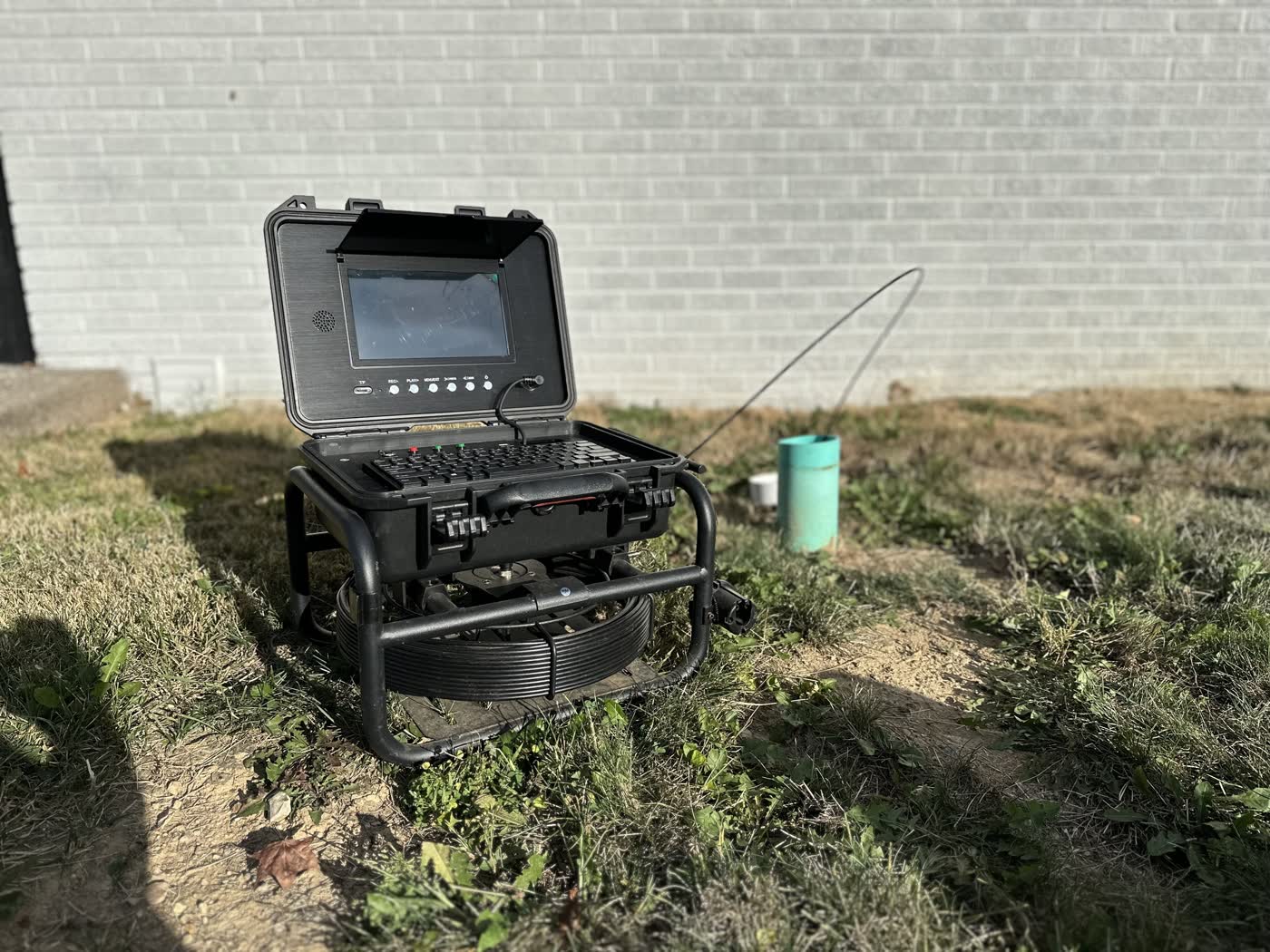
1. Bentonite-driven PVC belly formation (the dominant Highlands Ranch finding, every village). PVC laterals do not crack or scale under the bentonite-heaving stress, but they do dip and rise as the soil column shifts unevenly through the wet-dry cycle. On camera: visible drop-and-rise where the camera tilts down through a low spot, with standing water pooling in the dip. Northridge village (built 1981-1990) shows the most accumulated belly damage in the ranch because the laterals have been in the ground longest. Belly repair runs $1,500 to $4,500 for a single section, with multi-belly runs pushing $8,000 to $12,000 because access trenching across master-planned-community landscaping adds restoration cost.
2. Earliest Northridge PVC joint cement separation (1981-1985 transition window). The earliest PVC lateral installations in Northridge used the transitional 1980s solvent-cement joint methods, with a small fraction also using a transitional ABS plastic with documented joint-cement failures. The Uni-Bell PVC Pipe Association (per Uni-Bell PVC Pipe Association) documents the transition-era pattern as a known historical issue. On camera: visible joint gaps with surrounding soil intrusion. Repair is sectional replacement, running $4,000 to $15,000 per joint section depending on access depth.
3. HOA-landscape damage during lateral repair (universal Highlands Ranch complication). Northridge, Westridge, Eastridge, and Southridge all have heavy decorative landscape investment over the lateral run: paver patios, irrigation systems, sodded turf, mature ornamental trees. The Highlands Ranch HOA covenants also restrict the species and placement of replacement landscaping after a repair. Trenchless options (pipe bursting, cured-in-place lining) are more attractive in Highlands Ranch than in any other Denver-area community because the combined landscape restoration cost plus HOA replanting requirements frequently exceeds the trenchless premium. Trenchless lining runs $1,500 to $4,000 per affected section depending on length.
4. Westridge decomposed-granite frost-jacking (western parcels only). The Pikes Peak Granite outcrop along the western Westridge boundary is non-expansive but the granular weathered surface drains poorly during the freeze-thaw cycle. Water in the granular matrix freezes and expands, pushing the lateral upward in cyclic frost-jacking. Cumulative frost-jacking over 30+ years produces visible lateral displacement on the older 1985-1992 Westridge stock. Repair runs $1,500 to $5,000 because the granular-rock excavation is harder than standard Pierre Shale trenching.
5. Aggressive root intrusion from HOA-mandated ornamentals. The Highlands Ranch master-plan specifies ornamental street trees throughout the community, with Siberian elm, honeylocust, and green ash as common species. Mature trees planted in the 1981-2000 buildout window now have aggressive root systems searching for water sources. PVC laterals are more resistant to root intrusion than clay tile or cast iron, but solvent-cement joints can still admit roots at failed joint locations. On camera: hair-thin root fingers extending through visible joint gaps, typically growing toward standing water in the belly low spots. The American Society of Civil Engineers identifies root intrusion as a leading cause of sanitary sewer overflow nationally (per ASCE Infrastructure Report Card).
6. Altitude freeze-thaw cycling (universal across the ranch). Highlands Ranch sits 5,800 to 6,100 feet across the developed footprint, with the same 90-plus annual freeze-thaw cycles documented for the broader Denver metro (per Colorado Climate Center). Cyclic thermal stress on PVC over 30+ years compounds the bentonite-heaving belly formation. The Denver-area lateral replacement range of $4,000 to $15,000 reflects the combined cost premium of these geology + altitude factors versus the $3,956 national average Angi reports for sewer line replacement (per Angi sewer line cost guide).
One additional Highlands Ranch variable: Centennial Water and Sanitation District serves the entire community as the single utility authority. Permit windows and connection fees are consistent across all four villages. Coordination of a repair therefore involves three layers: Centennial Water permit (the easy layer), village HOA notification (the medium layer), Highlands Ranch Community Association master-plan compliance (the wildcard layer if the repair affects exterior visible work). Verify all three layers before booking any repair work, especially trenchless work where staging falls in HOA common-area.
Highlands Ranch inspections run on the same platform every Sewer Scope metro uses. Booking by phone at (720) 239-2322 or online. Same-week appointment standard, with Mon-Fri 7a-7p MT · Sat 8a-4p window. The technician arrives in the agreed window, locates the cleanout (standard exterior cleanouts in every Highlands Ranch home), runs the camera from access to the Centennial Water and Sanitation district city tap with footage marked, and packs out. The report follows in roughly 24 hours, distributed to buyer, agent, plumber, and lender as requested.
Highlands-Ranch-specific notes: every Highlands Ranch property has a standard exterior cleanout because the master-plan specified them at original install. Northridge village pre-1995 homes are the priority scope targets because the bentonite-belly accumulation window is widest on the oldest stock. We document village name and approximate build year on the report. Trenchless repair recommendations are common for Highlands Ranch properties because of the HOA landscape and master-plan compliance math.
Correct. Highlands Ranch is a census-designated place (CDP) of roughly 105,000 residents in Douglas County. It is unincorporated. There is no muni utility, no city council, no city manager. Douglas County provides jurisdictional services (planning, zoning, code enforcement, sheriff). Centennial Water and Sanitation District provides drinking water and wastewater service. The Highlands Ranch Metropolitan District oversees parks. Residents have voted against incorporation multiple times because the existing service arrangement provides what most cities provide, without the cost of running a municipal government.
Source: Highlands Ranch Metropolitan DistrictEasy mistake. Highlands Ranch is the master-planned community in Douglas County (this page). Highland is a neighborhood in Denver County, also called LoHi (Lower Highland). Highland in Denver is 1880s Italianate brick rowhouses on original vitrified clay tile. Highlands Ranch is 1981-2010 master-planned PVC. Completely different defect catalogs. Confirm county when discussing Highlands-prefixed work because the lateral material profile is the opposite of what you'd expect from the name.
Source: City and County of DenverHighlands Ranch was master-planned by Mission Viejo Company starting 1981 across four named villages: Northridge (built 1981-1990, the oldest stock), Westridge (1985-1995), Eastridge (1990-2000), Southridge (1995-2010). Each village has its own community center and HOA. Northridge shows the most accumulated bentonite-driven PVC belly damage simply because the laterals have been in the ground longest. Southridge is the newest and shows the fewest defects so far, though even the newest stock fails a sewer scope about 40% of the time, so a scope is still worth it. Westridge sits closest to Pikes Peak Granite outcrop, so a small fraction of Westridge parcels see decomposed-granite patterns.
Source: Highlands Ranch Metropolitan DistrictYes, for one specific reason: bentonite-driven PVC belly formation. Highlands Ranch sits on the same Pierre Shale and Denver Formation that defines the Front Range expansive-soil problem. PVC laterals do not crack, but they do dip and rise as the bentonite-rich soil column shifts. A belly that pools standing water shortens functional service life substantially even on a 20-year-old home. The pattern is invisible from the surface and requires a camera. Roughly 1 in 4 Highlands Ranch resale scopes documents at least one belly significant enough to warrant proactive monitoring or repair.
Source: Colorado Geological SurveyCentennial Water and Sanitation District is the single utility serving all of Highlands Ranch. The district was formed in 1980 to serve the planned Highlands Ranch community before development began. Centennial Water also serves parts of Lone Tree and parts of Castle Pines. Permit windows and connection fees are consistent across the entire Highlands Ranch service area. Centennial Water is owned by the Highlands Ranch Metropolitan District but operates as an independent utility authority. The HOA structure adds an extra notification step for any trenchless repair work.
Source: Centennial Water and Sanitation DistrictYes. Colorado Revised Statutes 38-35.7-102 and the SPD19 disclosure form require the seller to disclose the source of water and sewer service, any known defects, and any history of backups or repairs. DMAR treats pre-listing scope as best practice on any Highlands Ranch listing because of the bentonite-driven belly pattern that is invisible without a camera. Northridge village pre-1995 listings particularly benefit from scope documentation because the laterals are now 30+ years old and well into the bentonite-belly accumulation window.
Source: Denver Metro Association of REALTORSHighlands Ranch is the highest-density single residential market in the Front Range for Denver Metro Association of REALTORS (DMAR) members listing through REcolorado MLS (per DMAR and REcolorado). The scope conversation here is straightforward but specific: defect-find rates are lower than older Denver-area communities, but the bentonite-PVC belly pattern is invisible without a camera, so the value proposition is "catch the silent problem before closing." Northridge village pre-1995 listings are particularly high-value scope candidates because the 30+ year lateral age coincides with the bentonite-belly accumulation window. Colorado Revised Statutes 38-35.7-102 and the SPD19 disclosure form require sewer-system disclosure. Same professional report and high quality video. Same 24-hour turnaround. Clean handoff.
Highlands Ranch sits in Douglas. Castle Rock, Parker, Lone Tree, Castle Pines also Douglas.
The Meadows, Founders Village, Crystal Valley, downtown rhyolite-era core.
Aurora west, Centennial, Englewood, Cherry Hills. Mostly 1960s-1990s suburban.
Capitol Hill, Park Hill, Berkeley, Wash Park, Stapleton. Full century build spread.
Arapahoe + Adams split. Original Aurora 1920s clay, Tower 1990s+ PVC.
Belmar, Green Mountain, Federal Center. 1950s-1980s build dominant.