
Denver homes sit on bentonite-rich expansive clay at 5,280 feet. The Colorado Geological Survey maps the expansive-soil hazard moderate to high across most of the central Denver metro. A 1910 Capitol Hill clay tile lateral has been pushed and pulled by that soil for more than a century. Add 90-plus freeze-thaw cycles a year and you get the highest rate of offset joints and bellies in the Sewer Scope network. A $299 scope versus a much costlier Front Range replacement is the cleanest math in any Colorado closing. We schedule inside your Inspection Objection Deadline and deliver the report in 24 hours.
A Denver sewer scope at a specialty provider runs $250 to $400. Front Range Sewer Scope (operating inside Sewer Scope Denver) starts at $299. Denver sewer line replacement runs $4,000 to $15,000 typical, climbing to $25,000-plus in difficult-access historic neighborhoods (Angi Denver). The premium versus Indianapolis is real: Indy averages $3,956 per Angi, while Denver labor, expansive-soil excavation difficulty, and tight historic-district setbacks push Front Range numbers two to four times higher.
The scope is not a tax. It is the cheapest piece of information inside the Inspection Objection Deadline. A buyer who finds an offset joint or belly on day 4 of a 10-day objection window has every tool: file an Inspection Objection on the Colorado Real Estate Commission form, ask for repair before closing, take a concession equal to a Denver plumber bid, or withdraw under the Inspection Termination Deadline. A buyer who finds it three weeks after closing has paid the cost themselves.
The Colorado Real Estate Commission contract sets the Inspection Objection Deadline in writing. Most Denver transactions run 7 to 14 days from MEC (mutual execution of contract). Schedule the scope as soon as you go under contract. That leaves room for the 24-hour report, the buyer plumber bid, and a written objection before the deadline (Colorado Real Estate Commission forms).
Denver splits more sharply than the typical Midwest metro because soil hazard is a separate axis from era. Capitol Hill (80218) and Cheesman Park were platted in the 1880s. Park Hill, Berkeley, and Wash Park were the 1900s-to-1930s streetcar bungalow belts. Stapleton (now Central Park, 80238) and Lowry are post-2000 redevelopment of former airfields. Expansive-soil hazard maps cut across all of them (Colorado Geological Survey).
Capitol Hill, Cheesman Park, Congress Park, Park Hill, Berkeley, Highlands, Sloan's Lake, Wash Park. Original clay tile or early cast iron laterals. Hand-laid joints. 100-plus years of bentonite swell-shrink. Highest defect rate in the Front Range. Strong scope recommendation regardless of seller disclosure.
Hampden, Wellshire, Indian Creek, Park Hill North, Lowry edges. Late clay tile transitioning to cast iron. Orangeburg used selectively in some Denver tracts but less common than Indianapolis or Cincinnati. Cast iron from this window is mid-life and almost certainly scaled (cast iron 50 to 100 year lifespan).
Central Park (former Stapleton airport, 80238), Lowry (former Air Force base), Highlands Ranch, Lone Tree, Castle Rock. Modern PVC laterals. Low defect rate on materials, but expansive-soil settlement on filled or graded land still drives joint movement. Scope still useful, particularly for the joint-settlement signature.
FHA does not require a sewer scope on homes connected to a public Denver wastewater main. The FHA appraiser is required to flag visible signs of failure but is not required to scope the line (FHA News Blog, FHA.com). Denver Water and Metro Wastewater Reclamation District handle the system downstream of the lateral.
Denver-area lenders sometimes add a sewer scope condition on the loan commitment for properties built before 1972 in Capitol Hill (80218), Park Hill (80205, 80207), Berkeley (80211), Cheesman Park, and Wash Park (80209). This is a lender-overlay practice rather than a national FHA rule. Verify with the loan officer at conditional approval, before the Inspection Objection Deadline expires (Colorado Division of Real Estate).
For homes on septic instead of Denver city sewer (more common in unincorporated Adams, Jefferson, and Douglas county pockets), FHA does require a separate septic inspection by an approved professional. Minimum distance requirements apply between well, septic, and the property line. NACHI and Rocket Mortgage both publish buyer guidance recommending a scope on any pre-1980 home regardless of loan type (Rocket Mortgage, InterNACHI). The cost math does not need the lender to require it.
Same-week appointment standard across Denver, Aurora, Lakewood, Centennial, Highlands Ranch, and Lone Tree. Buyer or agent calls (720) 239-2322 or books. We coordinate Denver access with the listing agent and clear any historic-district cleanout-locate concerns up front.
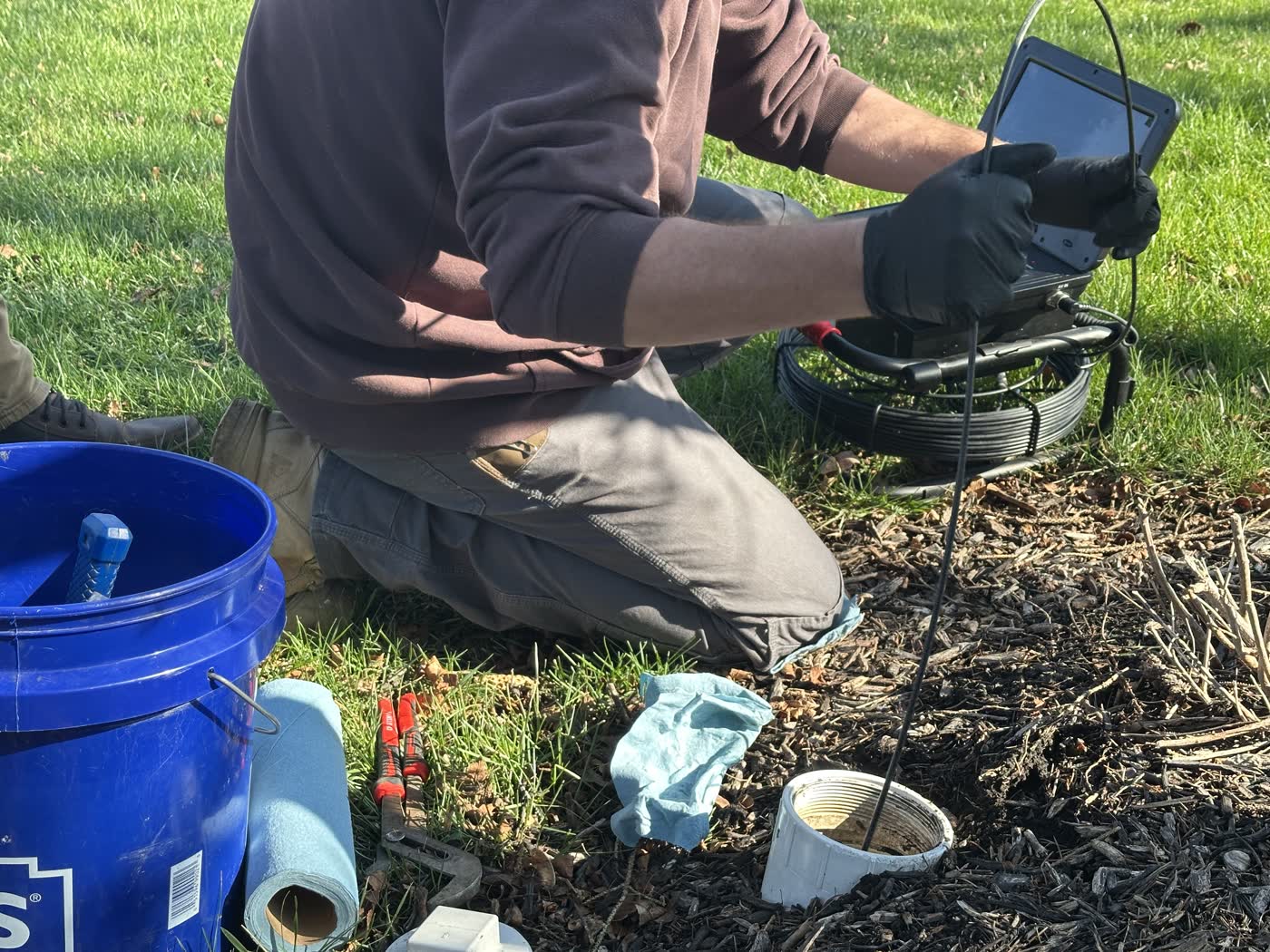
25 minutes on site. Camera runs from cleanout to the Denver wastewater tap. HD video plus video capture of any finding, with bentonite-soil heaving and altitude freeze-thaw cracking flagged distinctly. Pre-1920 Capitol Hill, Cheesman Park, and Park Hill homes often have no exterior cleanout and need a pulled-toilet pull.
Inspection report and video shared with the customer. Links are shareable without any login.
File an Inspection Objection on the Colorado Real Estate Commission form. Ask the seller to repair before close. Take a price concession equal to a Denver plumber bid. Withdraw under the Inspection Termination Deadline if the parties cannot align. Decisions made on real facts, not surprises after signing.
Denver-localized People Also Ask, May 2026.
For any Denver home built before 1980, yes. Capitol Hill, Cheesman Park, Park Hill, Berkeley, Highlands, Sloan's Lake, and Wash Park are full of pre-1940 housing stock with original clay tile or early cast iron laterals. Front Range bentonite-rich expansive soils and 90-plus freeze-thaw cycles per year push and pull those laterals more aggressively than Midwest equivalents. The Colorado Geological Survey maps the expansive-soil hazard moderate to high across most of central Denver. A scope is the only way to verify the lateral before the Inspection Objection Deadline.
Source · Colorado Geological Survey, NuFlow buyer guidanceThe Inspection Objection Deadline is the date set on the Colorado Real Estate Commission Contract to Buy and Sell Real Estate, by which the buyer must deliver any objection to the seller. Most Denver transactions set it 7 to 14 days after MEC (mutual execution of contract). Schedule the scope as soon as you go under contract so the 24-hour report and any Denver plumber bid arrive before the deadline. The contract also sets a separate Inspection Termination Deadline that gives the buyer a final exit if the parties cannot agree on a resolution.
Source · Colorado Real Estate Commission forms, Colorado Association of RealtorsDenver sewer line replacement runs $4,000 to $15,000 typical, climbing to $25,000-plus in difficult-access historic neighborhoods such as Capitol Hill, Park Hill, and Berkeley. Per-linear-foot pricing runs $1,500 to $5,000 in the Denver metro. Trenchless options exist but the Front Range bentonite clay can make some trenchless approaches infeasible because the soil moves the host pipe out of alignment as the new liner cures. Compare this to Indianapolis at $3,956 average per Angi. The Denver premium is real and tied to labor, soil difficulty, and historic-district permit complexity.
Source · Angi Denver, HomeAdvisor sewer mainFHA does not require a sewer scope on homes connected to public Denver wastewater. FHA appraisers must flag visible failure but cannot scope the line. Denver-area lenders sometimes add a sewer scope condition on the loan commitment for pre-1972 builds in Capitol Hill (80218), Park Hill (80205, 80207), Berkeley (80211), Cheesman Park, and Wash Park (80209). This is lender overlay practice, not a national FHA rule. For homes on septic instead of city sewer (more common in unincorporated Adams, Jefferson, and Douglas county pockets), FHA does require a separate septic inspection.
Source · FHA News Blog, FHA.comOnce you get the report you have all the facts. You file an Inspection Objection on the standard Colorado Real Estate Commission form before the Inspection Objection Deadline. Most Denver buyers either ask the seller to repair before closing, take a price concession equal to a Denver plumber bid, or withdraw under the Inspection Termination Deadline if the parties cannot agree. Front Range Sewer Scope is not a Denver plumbing company and never bids the fix, so there is no upsell pressure on the report. The Denver cost calculator on this site shows real Front Range repair ranges so you can sanity-check whatever bid the buyer plumber returns.
Source · Denver cost calculator on this site, Colorado Association of RealtorsIn the City and County of Denver, the homeowner owns the sewer lateral from the foundation to the connection at the city wastewater main. Denver Department of Transportation and Infrastructure (DOTI, formerly Public Works) handles the main. Metro Wastewater Reclamation District treats flow downstream and is the largest wastewater utility in the Front Range. Denver Water is the potable water utility and is separate. The homeowner pays for any lateral repair, root intrusion clearing, heave-driven offset repair, and tap-side connection work.
Source · Denver DOTI, Metro Wastewater Reclamation District, Denver WaterSame-week appointments across Denver, Aurora, Lakewood, Centennial, Highlands Ranch, and Lone Tree. booking. (720) 239-2322.