
FHA does not require a sewer scope on Colorado homes connected to a public city sewer. FHA appraisers must flag visible signs of failure but cannot scope the line. For Colorado homes on septic instead of public Denver wastewater, FHA does require a separate septic system inspection by an approved professional. Some Denver-area lenders add a sewer-scope condition on loan commitment for pre-1972 builds in Capitol Hill, Park Hill, Berkeley, Cheesman Park, and Wash Park. That is lender-overlay practice, not a national FHA rule.
FHA does not require a sewer scope on homes connected to a public city sewer system. The FHA appraiser is required to identify and report any visible signs of failure (sinkholes over the lateral run, evidence of recent excavation, visible pipe damage at the cleanout, sewer odors, slow drains) but the appraiser does not run a camera and does not scope the line (FHA News Blog, FHA.com).
HUD publishes the underlying property condition standards through the Single Family Housing Policy Handbook 4000.1, which the FHA appraiser follows (HUD 4000.1). The handbook treats functional sewer service as a Minimum Property Requirement (MPR), but functional service is verified through visible appraisal indicators, not through a camera run.
The result: a buyer on FHA financing for a Capitol Hill brownstone with a 1903 cast iron lateral that scaled itself to half-diameter 30 years ago is still FHA-eligible on the appraisal alone. The FHA appraiser may not flag the lateral because no surface evidence is visible. That is the gap a separately-ordered Denver sewer scope inspection fills.
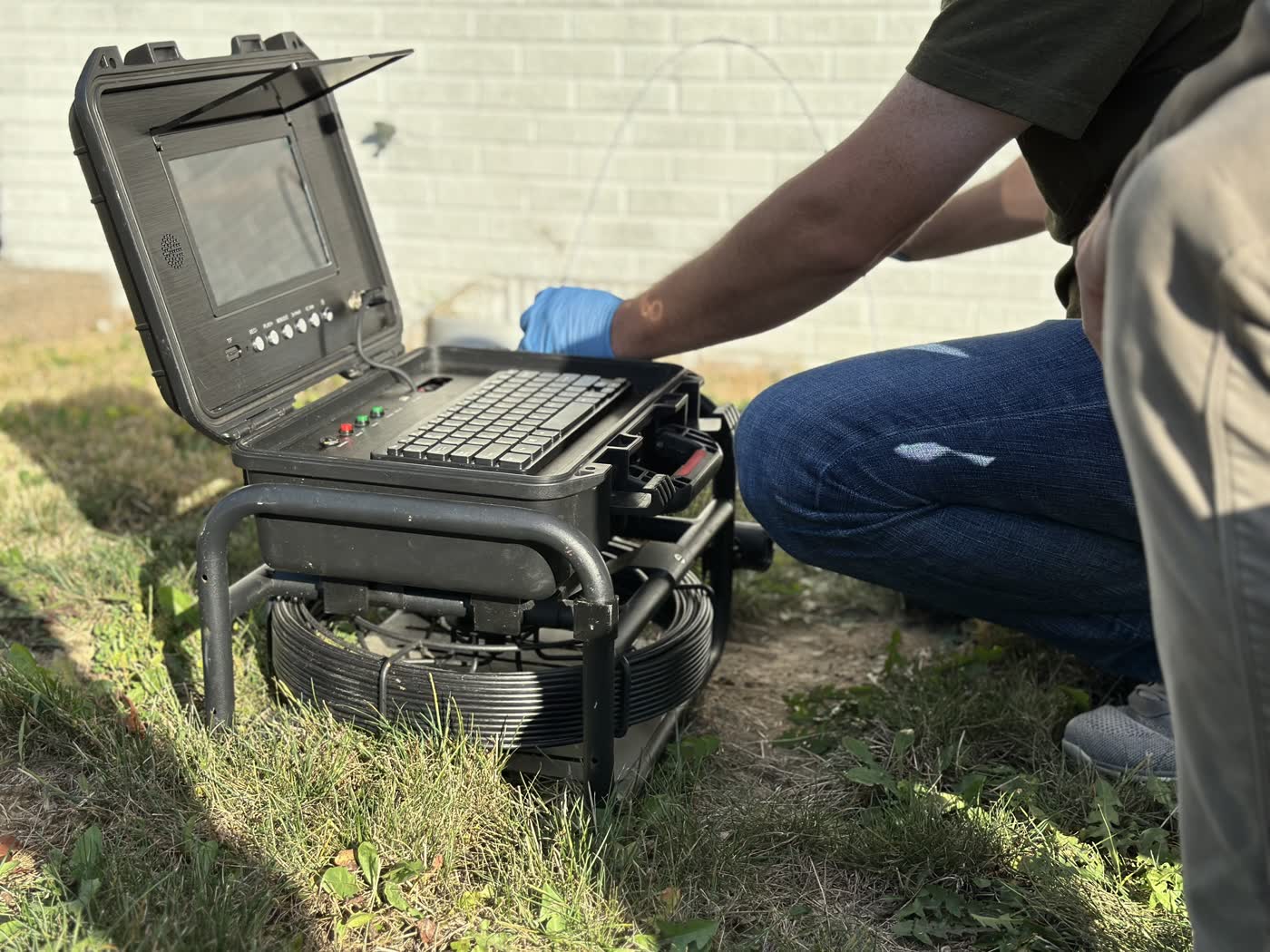
For Colorado homes on septic instead of public Denver wastewater, FHA does require a separate septic system inspection by an approved professional. Minimum distance requirements apply between well, septic, and the property line per HUD 4000.1 (HUD, FHA.com).
Septic-served Colorado properties are more common in the foothills west and southwest of central Denver (parts of Jefferson County around Conifer, Evergreen, and Morrison), in unincorporated Adams County north of Thornton, in unincorporated Douglas County south of Castle Rock, and in unincorporated Arapahoe County east of Aurora. Most central Denver, central Aurora, central Lakewood, central Centennial, central Highlands Ranch, and central Lone Tree addresses are on public wastewater served by Denver DOTI and treated by Metro Wastewater Reclamation District (Metro Wastewater Reclamation District).
If the property is septic, the FHA-approved septic inspection is required regardless of housing-stock era. If the property is on city sewer, FHA does not require a scope on the lateral, but the buyer can still order one as a standalone ancillary inspection inside the Inspection Objection Deadline window.
While FHA does not require a sewer scope on city-sewer Colorado homes, individual Denver-area FHA lenders sometimes add a sewer-scope condition to loan commitment as a lender overlay. The Colorado Division of Real Estate publishes guidance on lender practices generally but lender overlays are individually set by each lender's credit-policy committee (Colorado Division of Real Estate).
The Denver ZIP pattern that triggers overlay conditions most often:
Capitol Hill (80218) and Cheesman Park (80206). Among the oldest housing stock in the City of Denver. 1880s through 1910s brownstones and brick foursquares. Cast iron and clay tile laterals are essentially universal in this stock. Several Denver-metro FHA lenders include scope as a standing overlay condition for any pre-1920 build in these ZIPs.
Park Hill (80205, 80207). Park Hill bungalows date primarily from the 1900s through the 1940s. The Park Hill historic district designation adds permit complexity for any future repair. Lenders writing FHA in this ZIP frequently add scope as a loan-commitment condition.
Berkeley (80211) and Sloan's Lake (80212). Late-1800s through early-1900s neighborhoods with mature cottonwood, Russian olive, and Siberian elm trees within striking distance of the lateral. Root-intrusion driven overlay conditions appear here more often than in newer ZIPs.
Wash Park (80209) and Platt Park (80210). 1900s through 1930s bungalow stock. Bentonite-soil expansion has worked through every joint in the original clay tile laterals over the past century. Lender overlay rate sits between the Park Hill and Highlands brackets.
Highlands (covered across 80211, 80212). Similar pattern to Berkeley. Highlands historic-overlay districts add permit complexity that lender credit committees factor into the overlay decision.
Newer Denver-area ZIPs (Central Park / former Stapleton 80238, Lowry, Highlands Ranch 80129, Lone Tree 80124, Castle Rock 80109) do not see scope overlays at any meaningful rate. The materials are post-2000 PVC and the defect profile is statistically minimal.
Whether FHA or the Denver-area lender requires a scope or not, the underlying cost math favors scoping any pre-1980 Denver home. Rocket Mortgage publishes buyer-side guidance that recommends scope on pre-1980 stock regardless of loan type (Rocket Mortgage). InterNACHI publishes overlapping technical guidance treating scope as a recommended ancillary inspection (InterNACHI).
The cost math: $250 scope versus $1,500 to $5,000 Denver lateral replacement. The Front Range expansive-soil overlay and altitude freeze-thaw weighting on top of standard pre-1980 housing-stock risk means the chance of finding something is meaningfully higher than the equivalent Midwest probability. The Colorado Inspection Objection Deadline framework gives the buyer the legal mechanism to respond to whatever the scope finds (Colorado Real Estate Commission forms).
Coordinate scope timing with the loan officer at conditional approval. If the lender has a standing overlay for the ZIP, the scope satisfies the condition. If not, the scope still informs the Inspection Objection on independent grounds. Either way the report drops into the same lender packet through the shareable link.
VA and USDA loans generally follow similar minimum-property standards to FHA for sewer service. Neither typically requires a scope on city sewer; both require septic inspection if the property is on septic. Conventional loans rarely include any sewer-related condition; the lateral status is entirely the buyer's discovery problem inside the Inspection Objection Deadline window. The Colorado Division of Real Estate confirms the general pattern through its lender-practices guidance (Colorado Division of Real Estate).
Same-week appointments across the five-county Denver metro. (720) 239-2322.