
$250 to $400 at specialty providers. Front Range Sewer Scope (Sewer Scope Denver) starts at $299. The interesting number is not the scope, though. It is the repair: $1,500 to $5,000 typical for a Denver lateral replacement, climbing to $25,000-plus in historic Capitol Hill, Park Hill, Berkeley, and Wash Park. Denver labor, bentonite-soil excavation difficulty, and historic-district permit complexity all push Front Range pricing roughly double the Indianapolis baseline.
Specialty Denver providers price the standalone scope $250 to $400. The Angi national benchmark of $159 to $250 (Angi sewer camera inspection cost) reflects flatter, lower-cost-of-living metros. Denver labor rates run higher than Midwest equivalents per regional cost-of-living indices. Front Range Sewer Scope (Sewer Scope Denver) starts at $299.
Bundled with a full home inspection, expect $150 to $250 added to the base inspection fee. Some Denver home inspectors subcontract the scope to a sewer-scope specialist rather than running their own camera. NACHI documents the value of separating the inspector from any party with a repair interest (InterNACHI). The buyer pays the same total either way; the question is who runs the camera and writes the report.
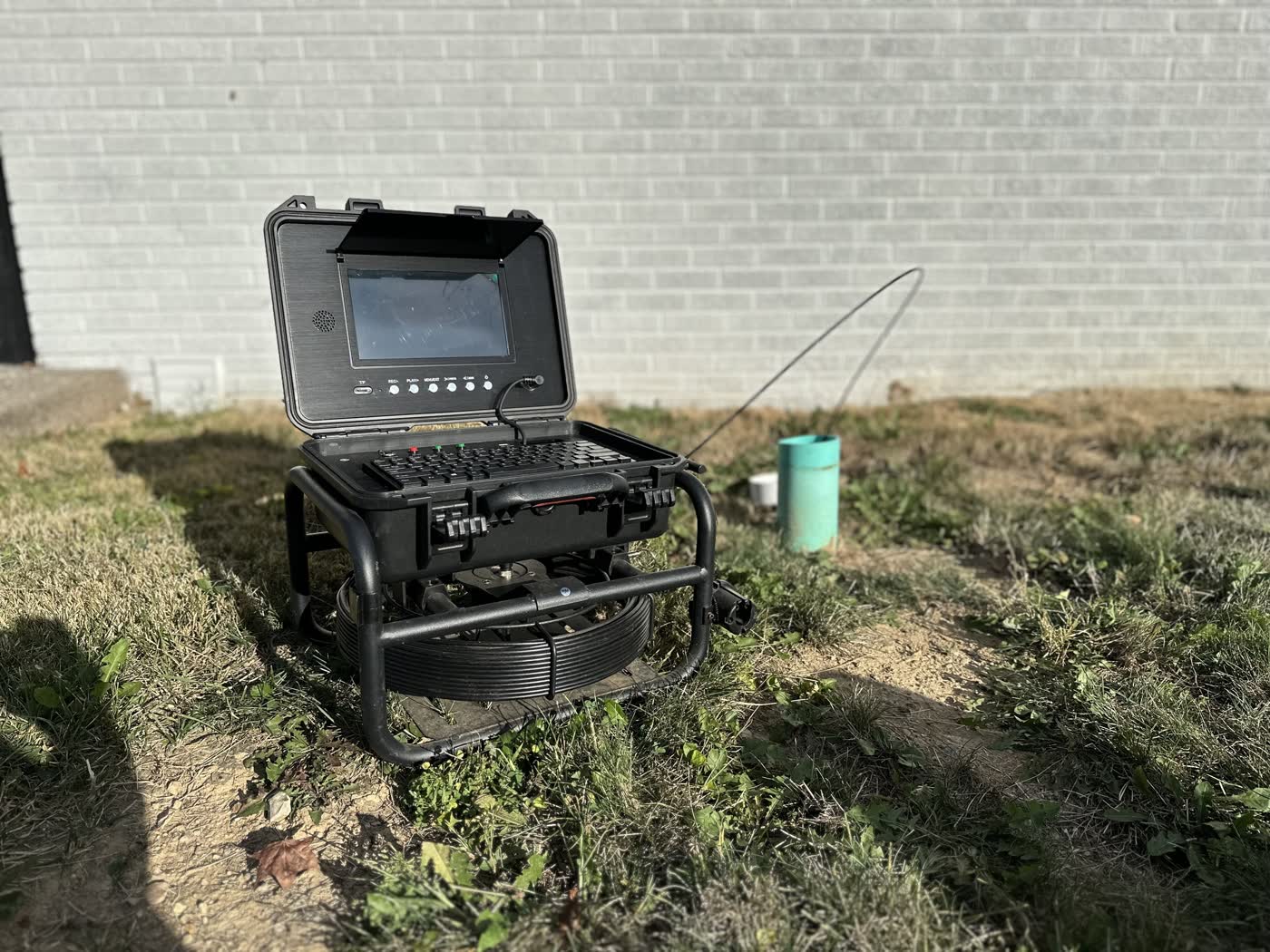
Angi Denver places sewer line installation at $5,000 to $10,000 typical, with the high end climbing to $25,000-plus in historic neighborhoods (Angi Denver). HomeAdvisor publishes overlapping national ranges (HomeAdvisor). Per-linear-foot pricing in the Denver metro runs $80 to $250 depending on depth, access, and surface restoration.
The three Denver-specific cost drivers:
Bentonite-soil excavation premium. Front Range expansive clays are harder to excavate cleanly than the loamy soils of Indianapolis or the brown-shale of Cincinnati. The Colorado Geological Survey maps the hazard moderate to high across most of central Denver (Colorado Geological Survey). The clay also makes some trenchless approaches infeasible because the soil continues to move the host pipe as the new liner cures. When trenchless cannot be used, full excavation drives the bid into the upper Denver range.
Historic-district setbacks and permit complexity. Capitol Hill (80218), Park Hill (80205, 80207), Berkeley (80211), Cheesman Park (80206), and Wash Park (80209) sit inside Denver historic-preservation overlays. Excavation in these districts requires additional permits, traffic-plate coordination if the lateral runs under the street, and sometimes structural-engineer sign-off if foundations sit close to the lateral. Permit complexity adds days, not hours.
Denver labor and altitude factors. The Denver MSA cost-of-living index sits well above the Indianapolis or Cincinnati MSAs. Plumber, excavator, and supervisor hourly rates reflect that. The 5,280-foot altitude does not change the work itself, but the dense bentonite-soil compaction does change the effort required per foot of excavation.
Denver Water is the potable-water utility (Denver Water). Metro Wastewater Reclamation District is the largest wastewater treatment utility on the Front Range (Metro Wastewater Reclamation District). Denver Department of Transportation and Infrastructure (DOTI, formerly Public Works) handles the city wastewater main itself (Denver DOTI). The homeowner owns the lateral from the foundation to the connection at the city main.
Denver sanitary sewer connection-tap fees and excavation permit costs vary by tract and connection type. Specific dollar amounts shift on the Denver Water and Denver DOTI fee schedules and we will not invent numbers here. The honest answer is: check the Denver Water rate schedule and the Denver DOTI fee page before quoting any specific permit-cost figure. Most Denver plumbing contractors who handle lateral work include current-year permit and tap costs in their bids directly.
Metro Wastewater connection fees apply when a new tap is being created or modified, which is rare in real-estate-transaction-driven repair work but does occur on full lateral replacement at the city-main connection. The fee schedule is published on the Metro Wastewater Reclamation District site (verify before quoting).
The Denver cost calculator on the home page returns specific Denver-market ranges per defect (Denver cost calculator). The defaults below are sourced from Angi Denver, HomeAdvisor, and Denver-area plumber published rates.
Root intrusion clearing. Hydro-jetting and root cutting at Denver residential rates runs $100 to $600. Higher than Indianapolis ($1,500 to $5,000) due to labor premium. Recurring intrusion requiring trenchless lining $1,500 to $4,000.
Belly (sag) repair. $1,500 to $4,500 for typical Denver belly repair. Full replacement of a sagged section runs $4,000 to $15,000 depending on length, depth, and bentonite-soil disturbance during excavation.
Offset joint. Trenchless lining $1,500 to $4,000 in the Denver market. Traditional excavation repair $50 to $250 per linear foot. Bentonite-soil expansion makes trenchless particularly variable: if the host pipe moves during cure, the liner can crack and require a second pass.
Crack or fracture. CIPP trenchless lining $1,500 to $4,000. Spot excavation repair varies widely with depth. Altitude freeze-thaw makes hairline cracks unstable. A 30-year monitoring plan that works fine in Memphis does not work in Denver.
Cast iron descaling. $200 to $800 for hydro-jet plus mechanical chain descaling. Restores diameter, extends service life. Common Capitol Hill and Park Hill move for mid-life cast iron that is scaled but not channeled through.
Historic clay tile replacement. $4,000 to $15,000 for a full 1900s-era clay tile lateral in a Capitol Hill, Park Hill, Berkeley, or Wash Park lot. Tight setbacks, historic-district permits, and bentonite-soil excavation drive the high end.
Tap connection repair. $2,000 to $6,000-plus depending on whether the connection is under the street (Denver DOTI traffic-plate coordination required) or in the front lot. Significantly more than Indianapolis ($4,000 to $9,000) due to the Denver historic-district overlay.
This is the cost story that matters in the Colorado real-estate transaction. A $250 Denver scope at day 4 of a 10-day Inspection Objection window gives the buyer every tool: file an Inspection Objection on the Colorado Real Estate Commission form, ask the seller to repair before closing, take a price concession equal to a Denver plumber bid, or withdraw under the Inspection Termination Deadline if the parties cannot agree. A buyer who finds the same offset joint after closing has paid $1,500 to $4,000 personally.
For a $700,000 Capitol Hill bungalow with a 1908 clay tile lateral that the camera flags with three offset joints and a deep belly, the lateral-replacement bid will land between $14,000 and $22,000. Knowing that before the Inspection Objection Deadline is the entire purpose of the scope. Not knowing it costs orders of magnitude more.
DMAR-area listing agents in Denver, Aurora, Lakewood, and Centennial increasingly recommend pre-listing scope on pre-1980 inventory specifically because the post-closing version of this conversation never benefits the seller either. Pre-listing scope at $250 plus a known-defect price adjustment in the listing is materially cheaper than a re-trade negotiation 8 days into the Inspection Objection window with a buyer plumber waving a $22,000 bid (DMAR).
Same-week appointments across the five-county Denver metro. (720) 239-2322.