
Boulder County is its own real estate market with its own realtor board (BARA), its own MLS (IRES), and its own open-space policy that has frozen new development outside city limits since the 1970s. The housing stock is the inventory. Boulder city (1880s University of Colorado housing through 1990s build), Longmont (1880s farm-town downtown plus 1955-1995 suburban), Louisville and Lafayette (coal-mining-era miners' housing from the 1890s-1930s plus post-2021 Marshall Fire rebuilds), Erie (split with Weld County, master-planned 1995+), Superior (master-planned 1990s+, partially destroyed in the Marshall Fire). Mountain Nederland is mostly private septic. The defect catalog mixes 1880s University Hill clay tile, coal-mining-era miners' housing patterns, and post-2021 fire-rebuild PVC. About 25 minutes on camera works out which.
Boulder County covers 740 square miles north and northwest of Denver. The 2020 census recorded 330,758 residents (per U.S. Census Bureau QuickFacts). The American Community Survey reports the median Boulder County housing unit was built in 1979, but that median masks a much wider spread than the suburban arc counties. Boulder city's pre-1940 University of Colorado neighborhoods (Mapleton Hill, University Hill, Whittier, Goss Grove) are one age cohort; the 1880s coal-mining-era Louisville and Lafayette historic cores are another; the 1955-1995 suburban Longmont and Boulder buildout is a third; and the 2022-2025 Marshall Fire rebuild stock in Louisville, Superior, and unincorporated Boulder is a fourth distinct cohort.
City of Boulder is the county center and home to the University of Colorado Boulder main campus. CU was founded in 1876 and the residential neighborhoods immediately adjacent to campus, including Mapleton Hill (the original wealthy residential district, now a National Register historic district), University Hill (student-rental-dominant since the 1920s), Whittier, and Goss Grove, hold housing stock dating from the 1880s through the 1920s. The lateral material in this pre-1940 Boulder city stock is original vitrified clay tile and first-generation cast iron, with significant Orangeburg in 1948-1968 spot replacements. Boulder Water Resources operates the city utility. Boulder's Open Space and Mountain Parks program (per City of Boulder OSMP) has frozen new development outside city limits since the 1970s, so the existing housing stock is the inventory.
Longmont is the second-largest city in Boulder County, founded in 1871 as a farm-town along the St. Vrain Creek corridor. The historic downtown along Main Street and 3rd Avenue holds late-1800s and early-1900s commercial and residential buildings on original clay tile and cast iron. The bulk of Longmont residential housing dates from 1955 through 1995 suburban expansion. Longmont Water + Wastewater operates the city utility independently.
Louisville and Lafayette were both established as coal-mining towns in the 1880s. Louisville coal mines operated 1877 through the 1950s; Lafayette mines through the 1940s. The historic downtowns of both cities hold miners' housing dating to the 1890s-1930s. The Louisville and Lafayette Marshall Fire of December 30, 2021, destroyed roughly 1,084 homes and damaged hundreds more in Louisville, Superior, and unincorporated Boulder County (per Boulder County Marshall Fire response). The resulting 2022-2025 PVC rebuild stock now coexists with the original 1890s coal-miner housing on the same blocks in some Louisville and Superior neighborhoods.
Erie is the Town of Erie, which straddles the Boulder County and Weld County line. Boulder County jurisdiction covers the western half. Erie was originally a coal-mining town like Louisville and Lafayette, but the bulk of current Erie housing dates from 1995 onward in master-planned developments (Vista Ridge, Erie Highlands). PVC laterals throughout the post-1995 stock.
Superior was originally a coal-mining camp like Louisville and Lafayette, with the modern town incorporated in 1896 but the housing stock predominantly post-1990 master-planned (Rock Creek Ranch). The Marshall Fire of December 2021 destroyed a substantial fraction of Superior housing; rebuild is ongoing through 2025.
Nederland and the mountain communities west of Boulder city (Coal Creek Canyon, Eldora, Ward, Allenspark, Jamestown) are mostly on private septic systems at elevations from 8,000 to 10,000 feet. Boulder County Public Health oversees on-site wastewater treatment system (OWTS) permitting in unincorporated areas.
Soil across Boulder County varies more than any other Front Range county. Eastern Boulder County (Longmont, Louisville, Lafayette, Erie, Superior, Niwot) sits on Pierre Shale with bentonite content matching Denver County's expansive-soil problem. Boulder city sits on a mix of Pierre Shale alluvium along Boulder Creek and decomposed granite at the western edge toward Chautauqua and the Flatirons. The mountain communities west of the foothills sit on Boulder Creek Granodiorite and Precambrian metamorphic rock (per Colorado Geological Survey). Elevation across the developed footprint runs 5,000 to 10,000 feet, with the Nederland-area parcels seeing 110-plus annual freeze-thaw cycles compared to the Denver baseline of 90.
1. University of Colorado area clay tile and cast iron (Mapleton Hill, University Hill, Whittier, Goss Grove). The 1880s-1920s housing stock immediately adjacent to CU's main campus is uniformly on original vitrified clay tile and first-generation cast iron laterals. Mortar joint failure plus root intrusion dominates the defect catalog. The aggressive Boulder-area root species are Siberian elm (heavy throughout the older neighborhoods), cottonwood along Boulder Creek, Russian olive across the urban fringe, and honeylocust street plantings on University Hill. American Society of Civil Engineers identifies root intrusion as a leading cause of sanitary sewer overflow nationally (per ASCE Infrastructure Report Card). University Hill rental-property turnover means many of these laterals have seen accelerated wear from sustained high-volume use over the decades.
2. Coal-mining-era Louisville and Lafayette miners' housing. The 1890s-1930s miners' housing in historic downtown Louisville and Lafayette is on vitrified clay tile and first-generation cast iron. Some original utility runs pass through old mine-shaft backfill, which settles differentially over decades and pulls laterals out of alignment. On camera: visible step-offsets at one or more joints. Repair commonly runs $1,500 to $4,000 because the mining-era backfill complicates excavation. Louisville and Lafayette Public Works can provide records of historical coal-mine subsidence in some neighborhoods.
3. Bentonite-driven differential heaving (eastern Boulder County). Longmont, Louisville, Lafayette, Erie, Superior, Niwot all sit on Pierre Shale with bentonite content matching Denver County. Swell potential of 100 percent or more between dry and saturated state (per Colorado Geological Survey) drives differential heaving that fractures rigid materials and bellies PVC. On camera in pre-1975 Longmont cast iron: shear-cracked sections. On camera in post-1995 Erie or Superior PVC: belly formation.
4. Post-Marshall-Fire rebuild lateral inspection. The 2021 Marshall Fire destroyed 1,084 homes in Louisville, Superior, and unincorporated Boulder. The 2022-2025 rebuild stock is uniformly schedule-40 PVC under current code. A scope on a rebuild property therefore documents a brand-new lateral, which the buyer report can use as a baseline reference for future inspections. The fire also damaged but did not destroy hundreds of additional homes, and those properties may have a mix of original (pre-2021) lateral with new connections at the property line where the city tap was modified during rebuild. The mix produces transition-joint defect risk over the next 20 years that warrants documentation now.
5. Mountain-community private septic (Nederland, Coal Creek Canyon, Eldora, Ward, Allenspark, Jamestown). Most mountain Boulder County parcels are on private septic at elevations 8,000-10,000 feet. The Boulder County Public Health Department oversees OWTS permitting. A scope on a septic property terminates at the tank inlet, with the camera documenting inlet baffle condition, tank lid seal, and the lateral run from house to tank. Septic systems at 8,000+ feet see aggressive freeze-thaw cycling that drives tank-lid seal failure and inlet baffle frost-jacking. Mountain septic inspection plus camera scope is standard pre-purchase due diligence on any mountain-community resale.
6. Decomposed granite frost-jacking on Boulder west-side parcels (Chautauqua, NCAR area, west of Broadway). The Boulder Creek Granodiorite outcrop along the western edge of Boulder city is non-expansive but the weathered granitic surface drains poorly during the freeze-thaw cycle. Cumulative frost-jacking over 50+ years on pre-1970 west-side Boulder properties produces visible lateral displacement on cast iron and clay tile runs. Repair runs $1,500 to $5,000 because the granitic excavation is harder than standard Pierre Shale trenching.
One additional Boulder County variable: the Boulder Area Realtor Association (BARA, per BARA) and the Information and Real Estate Services (IRES) MLS dominate Boulder County listings, not DMAR and REcolorado. The pre-purchase scope conversation lands differently with BARA agents than DMAR agents because the Boulder market's older average housing stock (especially in the CU-adjacent neighborhoods) makes scope essentially mandatory on a wider share of listings than further south in the metro.
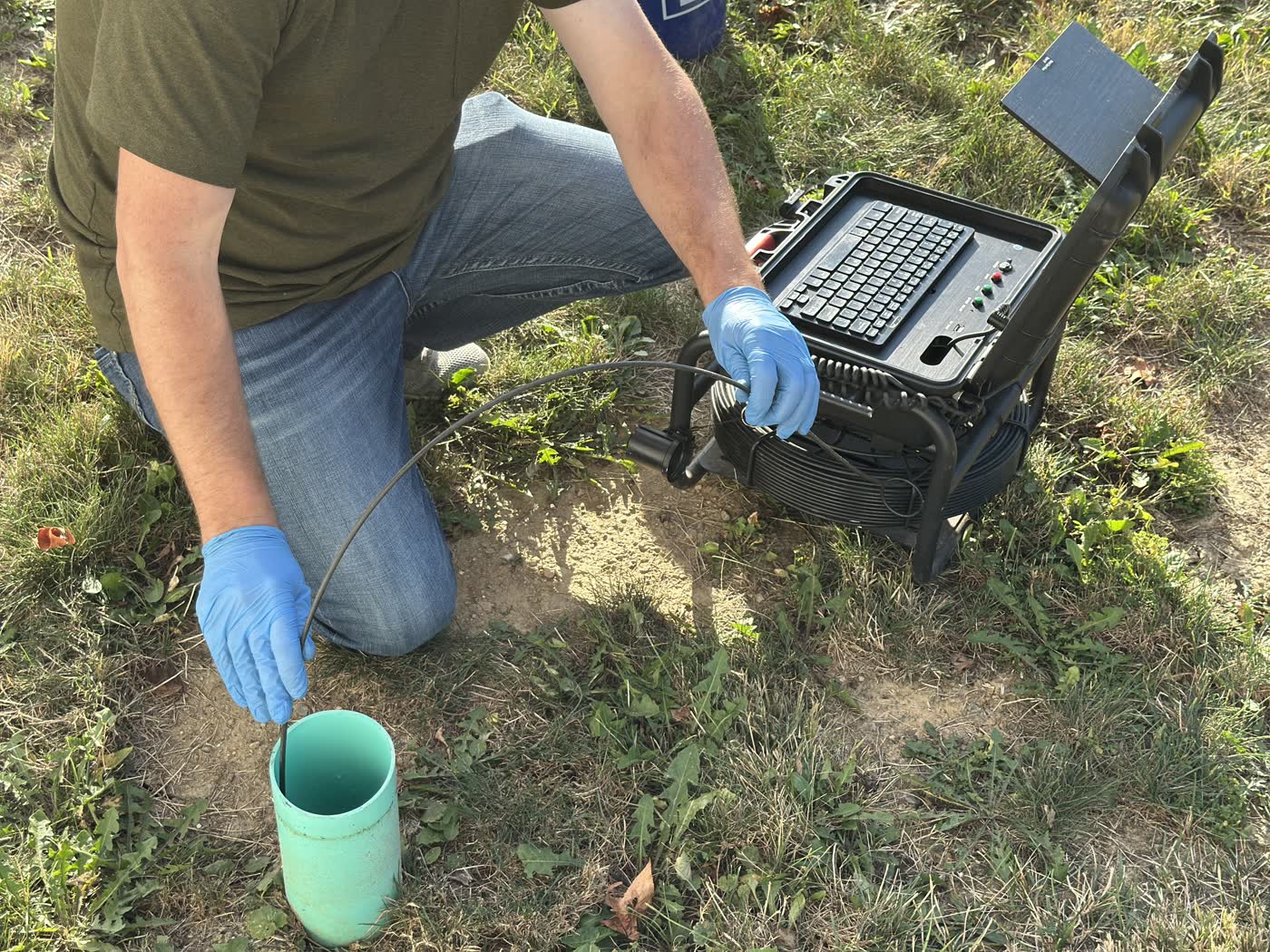
Boulder County inspections run on the same platform every Sewer Scope metro uses. Booking by phone at (720) 239-2322 or online. Same-week appointment standard, with Mon-Fri 7a-7p MT · Sat 8a-4p window. The technician arrives in the agreed window, locates the cleanout (or the septic access port for mountain properties), runs the camera from access to the city tap or septic inlet with footage marked, and packs out. The report follows in roughly 24 hours, distributed to buyer, agent, plumber, and lender as requested.
Boulder-specific notes: pre-1940 Mapleton Hill, University Hill, and Whittier properties frequently have no exterior cleanout, requiring access through a basement toilet or a removed cleanout cap on the interior stack. Nederland and mountain-community private septic properties require a septic-tank pump-out coordinated with the local OWTS service provider; we coordinate that handoff. Marshall-Fire-rebuild Louisville and Superior properties have brand-new exterior cleanouts.
Boulder County is its own real estate market. The Boulder Area Realtor Association (BARA) is the local board rather than DMAR. Listings often appear on IRES MLS rather than REcolorado. Boulder city has an Open Space and Mountain Parks program that has frozen new development outside city limits since the 1970s, making existing housing stock the entire inventory. The CU campus area (1880s-1920s housing) has the oldest stock in the county; Longmont farm-town downtown holds 1880-1940 historic residential; Louisville and Lafayette have coal-mining-era miners' housing.
Source: U.S. Census Bureau Boulder County Colorado QuickFactsService is split across municipal utilities. Boulder Water Resources serves the City of Boulder. Longmont Water + Wastewater serves Longmont. Louisville and Lafayette operate their own municipal utilities. Superior, Erie (split with Weld), Niwot use various special districts. Nederland and mountain communities west of Boulder are mostly on private septic. Unincorporated eastern Boulder County uses Left Hand Water District or Longmont Wastewater depending on parcel.
Source: Boulder County governmentYes. Mapleton Hill, University Hill, Whittier, Goss Grove (the CU-adjacent neighborhoods) hold housing dating from the 1880s through the 1920s. Lateral material is original vitrified clay tile and first-generation cast iron, with significant Orangeburg in 1948-1968 spot replacements. Many of these homes have been converted to rental properties serving CU students, which means high-volume use has accelerated wear on existing laterals. Pre-listing scope is essentially mandatory on CU-adjacent listings.
Source: University of Colorado BoulderLouisville and Lafayette were established as coal-mining towns in the 1880s. Louisville mines operated 1877 through the 1950s; Lafayette through the 1940s. Historic downtowns hold miners' housing dating to the 1890s-1930s on clay tile and first-generation cast iron. Mining heritage adds complications: original utility runs sometimes pass through old mine-shaft backfill (settles differentially over decades), and the December 2021 Marshall Fire destroyed roughly 1,084 homes in Louisville, Superior, and unincorporated Boulder County, with the resulting rebuilds creating new 2022-2025 PVC lateral stock.
Source: City of Louisville · Boulder County Marshall Fire responseYes, mostly. The Pierre Shale and bentonite-rich Denver Formation extend into the eastern half of Boulder County. Boulder city itself sits on a mix of Pierre Shale alluvium and decomposed granite (Boulder Creek and Flagstaff foothills outcrop). Longmont, Louisville, Lafayette, Erie, Superior sit squarely on Pierre Shale with heavy bentonite content. Boulder city western neighborhoods toward Chautauqua and the Flatirons sit on weathered granite (non-expansive but more abrasive on cast iron over decades).
Source: Colorado Geological SurveyYes. Colorado Revised Statutes 38-35.7-102 and the SPD19 disclosure form require the seller to disclose the source of water and sewer service, any known defects, and any history of backups or repairs. The Boulder Area Realtor Association (BARA) treats pre-listing scope as best practice on any pre-1980 Boulder County listing. For Nederland and mountain-community septic properties, SPD19 requires disclosure of septic tank inspection and pumping history.
Source: Boulder Area Realtor AssociationBoulder County is its own market for Boulder Area Realtor Association (BARA) members listing through IRES MLS (per BARA and IRES). DMAR + REcolorado coverage extends into Boulder County for the southern submarkets (Louisville, Lafayette, Superior, Erie) where listings frequently appear on both. The scope conversation here is the highest-stakes in the metro because the CU-adjacent pre-1940 stock makes scope essentially mandatory on a wider share of listings than further south. Colorado Revised Statutes 38-35.7-102 and SPD19 require sewer-system disclosure, and a documented pre-sale scope answers it cleanly. Same professional report and high quality video. Same 24-hour turnaround. Clean handoff.
Westminster, Thornton, Commerce City, Brighton. Industrial legacy in Commerce City.
Lakewood, Wheat Ridge, Golden, Arvada. Pierre Shale foothills geology.
Capitol Hill, Park Hill, Berkeley, Wash Park, Stapleton. Full century build spread.
Belmar, Green Mountain, Federal Center. 1950s-1980s build dominant.
Aurora west, Centennial, Englewood, Cherry Hills. Mostly 1960s-1990s suburban.
Castle Rock, Highlands Ranch, Parker, Lone Tree. Mostly 1980-2010 PVC.