
Front Range Sewer Scope, operating inside the Sewer Scope network, scopes sewer laterals for Denver real-estate transactions. Camera at the cleanout, through the lateral, to the Denver wastewater tap. About 25 minutes on site. Professional PDF and shareable video link in under 24 hours. $299 starting. No Denver plumber attached, no repair quote, no upsell.
A sewer scope inspection sends a small high-resolution camera through your home sewer lateral, from the cleanout all the way to where your lateral connects to the Denver wastewater main. Front Range Sewer Scope technicians record video and stills of every defect along the run, mark depth and footage every five feet, and pull the camera. The PDF and the shareable video link reach the buyer, the listing agent, the lender, and the buyer plumber within 24 hours.
The reason this exists as a separate service from "the buyer brought their own plumber" is the conflict of interest. A Denver plumber doing scope work has a financial interest in finding repair work to quote. Front Range Sewer Scope has zero repair-side incentive. The report is the report. The buyer plumber (or any Denver plumber the buyer picks) bids the fix on whatever timeline the Inspection Objection Deadline allows (InterNACHI on sewer scoping, Pillar To Post).
In Denver the specialist standard matters more than in flatter, lower-elevation metros. Three Front Range factors stack the defect rate: bentonite expansive-clay heave, 90+ annual freeze-thaw cycles at 5,280 feet, and a pre-1940 cast iron and clay tile housing core in Capitol Hill, Park Hill, Berkeley, and Wash Park. A Denver plumber looking at a 1903 brownstone has three or four obvious upsell directions inside that combination. Front Range Sewer Scope has none.
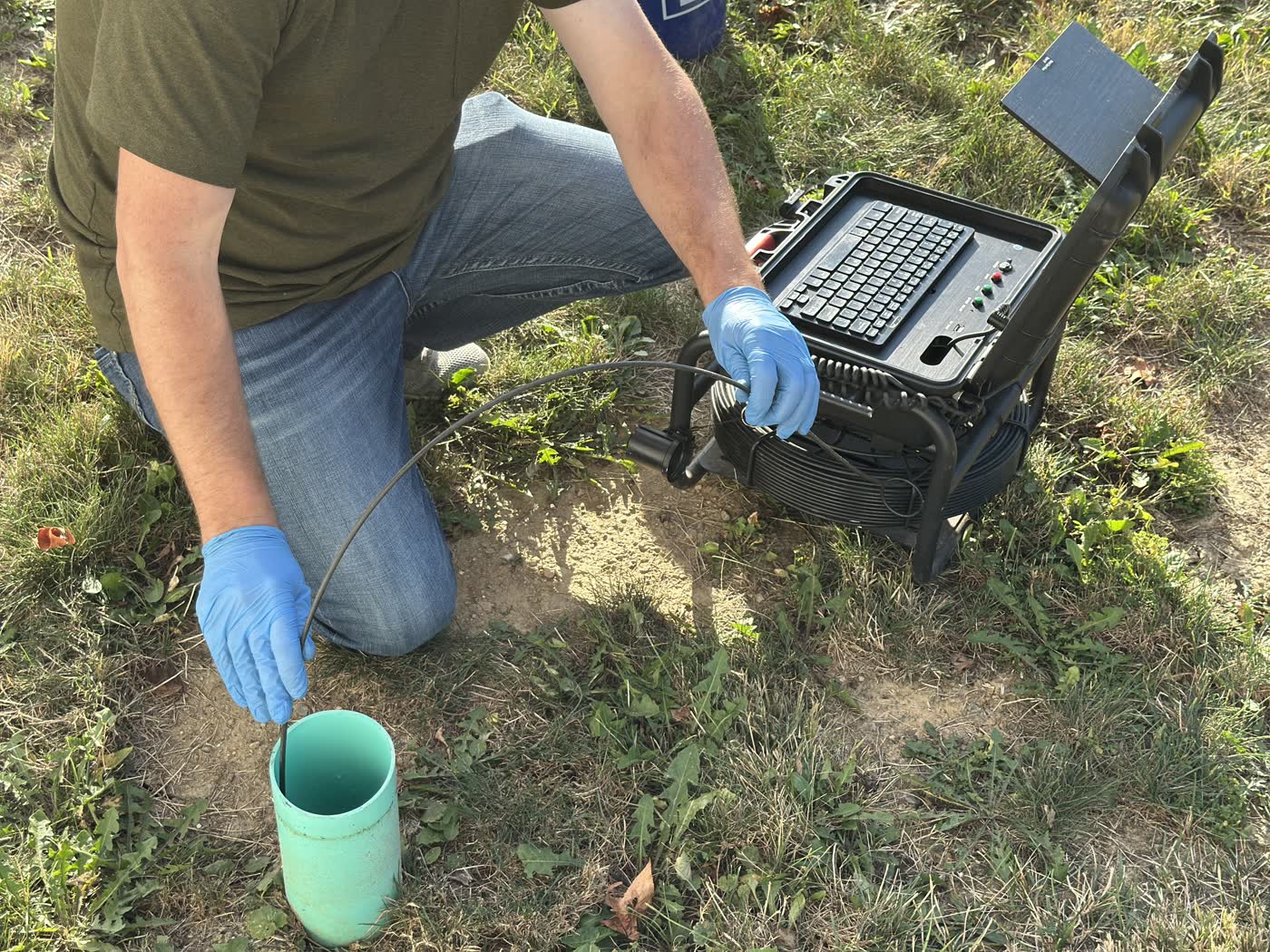
The full defect dictionary lives on the Denver home page. Here are the four most common findings on Denver-metro laterals.
Differential vertical movement of the lateral driven by bentonite-clay wet-dry cycles. Step-jogs at joints. Sections rotated out of round. Per the Colorado Geological Survey, hazard rating is moderate-to-high across most of the Denver metro (CGS expansive soils).
Longitudinal and transverse cracks from 90+ freeze-thaw cycles a year at 5,280 ft (NOAA Boulder). Cast iron and clay tile from the 1890s through 1940s have absorbed roughly 13,000 cycles. Hairline cracks that would be re-scoped in five years at Indianapolis altitude are re-scoped in two on the Front Range.
Capitol Hill (80218, 80203), Park Hill (80205, 80207, 80220), Berkeley (80211), and Wash Park (80209) sit on cast iron mains from the 1880s through 1920s. Most are at or past the 100-year ceiling. Descaling can restore diameter; full replacement is needed where bottom channeling has formed.
Denver root intrusion is Siberian elm, plains cottonwood, Russian olive, and silver poplar. (Silver maple, the Indianapolis problem species, is not common in Denver.) Colorado State Forest Service tracks species presence by county (CSFS tree species).
About seven of every ten Denver-metro jobs come in through a DMAR or REcolorado realtor. The footage is the same. The reason it gets ordered is not.
Scope inside the Inspection Objection Deadline window. Math is clean: $250 versus a $9,000+ Capitol Hill lateral replacement after expansive-soil heave (Angi Denver cost data, see calculator). Pre-1980 Denver-County stock is statistically likely to have at least one heave-driven offset.
Pre-purchase sewer scope →Scope before listing. The Colorado Real Estate Commission Seller Property Disclosure form SPD19-5-09 obligates sellers to disclose known defects. Pre-listing scope gives the seller documented knowledge they can disclose accurately, which lands better than a buyer-side surprise during Inspection Objection.
Pre-sale sewer scope →Same-week scheduling and pay-after-inspection billing are the killer features for the DMAR agent ordering scope #60 this year. Professional PDF, SPD19-compatible disclosure packet, no buyer plumber upsell blowing up the Inspection Objection window.
Realtor partnership →Front Range Sewer Scope inspections start at $299. The Denver specialty market generally sits in the $250 to $400 band, with national averages of $250 to $500 (Angi national). Denver labor rates run higher than Indianapolis or Cincinnati, which is reflected in the starting price.
Now compare what the camera prevents in Denver specifically. The Angi Denver lateral-replacement averages run higher than the Indianapolis comparables (Angi Denver). Full cast iron replacement on a Capitol Hill or Park Hill brownstone with sidewalk and street restoration runs $1,500 to $5,000 on a typical lateral. Expansive-soil heave replacement runs into the same range, sometimes higher when Denver DOTI street-tear-up is required. A $250 scope is not a tax. It is the cheapest piece of information in the Denver transaction.
You pay after the inspection. No deposit and no upfront payment. The Denver cost calculator on this site shows real Front Range repair ranges by defect type, depth, and length.
In the City and County of Denver, the homeowner owns the sewer lateral from the foundation to the point where it connects to the city wastewater main. Denver Department of Transportation and Infrastructure (DOTI, formerly Denver Public Works) handles the main itself. Metro Wastewater Reclamation District treats the flow further downstream (Denver DOTI, Metro Wastewater Reclamation District).
Denver sanitary sewer system development charges (the connection-tap fee) and permit fees are published on the Denver DOTI fee schedule and vary by service size. Verify current rates with Denver DOTI before quoting any specific dollar number to a Denver client (TBD · placeholder, do not quote without Denver DOTI confirmation). Contractor must be Denver-licensed and bonded; outside the City and County of Denver, Aurora, Lakewood, Wheat Ridge, Arvada, Centennial, and Highlands Ranch each have their own permit and contractor requirements that the buyer plumber will pull when bidding the repair.
None of this changes who pays. It changes the math on what the repair will cost. The scope tells you which side of the lateral has the defect, which determines who is on the hook, and which determines the bid your buyer plumber writes.
Three Front Range tools on the Denver home page do most of the buyer education work. Cited sources, real Denver data, no fluff.
Punch in your Denver, Arapahoe, Jefferson, Adams, or Douglas county ZIP. Get the housing-stock era and the expansive-soil and altitude-freeze-thaw risk profile for that neighborhood. Capitol Hill 80218, Park Hill 80205 and 80207, Berkeley 80211, Wash Park 80209 all classified HIGH. Central Park 80238, Highlands Ranch 80129, Lone Tree 80124 classified MODERATE, since even newer homes fail a sewer scope about 40% of the time.
Defect type, line length, lateral depth, optional Denver DOTI permit fees. Output is a Denver-metro cost range with footnotes citing Angi Denver, Homewyse Denver, and the Colorado Geological Survey expansive-soil correction. Built to print and show the buyer plumber.
Seven defect cards. Expansive-soil heaving, altitude freeze-thaw cracking, cast iron, Siberian elm roots, bellies, offsets, city-tap separation. Each card has the on-camera look, the Denver repair cost, the failure mode, and cited sources from Colorado Geological Survey, NOAA Boulder, and Denver DOTI.
Questions taken from Google People Also Ask, Denver-localized.
Denver sewer scope inspections typically run $299 to $400 at specialty providers. Bundled with a full home inspection, expect $150 to $250 added to the base. Front Range Sewer Scope starts at $299. You pay after the inspection. No deposit and no upfront payment. Denver labor rates run higher than Indianapolis or Cincinnati, which the starting price reflects.
Source · Angi nationalAbout 25 minutes on site for a typical Front Range residential lateral. Report delivery is under 24 hours, with most reports inside 12. Factors that can extend the on-site time include hard-to-find cleanouts (common in pre-1920 Capitol Hill brownstones and Lower Highland conversions), heaved sections that require slow camera advance through joint step-jogs, and bellies that pool water and slow the camera. Heaved Front Range laterals are slower to scope than flat Midwest installs.
Source · Alpha Environmental, Total House InspectionYes. Denver records more than 90 freeze-thaw cycles a year at 5,280 feet versus roughly 50 at Indianapolis altitude. Frost penetration on the Front Range averages 36 to 48 inches in the metro. Cast iron laterals in Capitol Hill and Park Hill that started life in the 1890s have absorbed approximately 13,000 freeze-thaw cycles. The Indianapolis equivalent is closer to 7,500. The same pipe material ages faster on the Front Range.
Source · NOAA Boulder, Balkan PlumbingFront Range soils contain bentonite and montmorillonite clays that expand when wet and contract when dry. The Colorado Geological Survey maps the hazard moderate-to-high across most of the Denver metro. Laterals move differentially: one section heaves while the adjacent section settles, opening offsets at every joint. Clay tile and cast iron from the 1890s through 1940s were never designed for the load. PVC handles the movement better but flexible couplings still drift apart at heaved joints.
Source · Colorado Geological Survey, CDOT expansive-soil guidanceIn the City and County of Denver, the homeowner owns the sewer lateral from the foundation to the connection at the city wastewater main. Denver Department of Transportation and Infrastructure (DOTI, formerly Denver Public Works) handles the main. Metro Wastewater Reclamation District treats flow downstream. The homeowner pays for lateral repairs, root intrusion clearing, heave-driven offset repair, and any tap-side connection repair. Denver sanitary sewer connection-tap fees and permit costs are on the Denver DOTI fee schedule (verify before quoting).
Source · Denver DOTI, Metro Wastewater Reclamation DistrictNo. Front Range Sewer Scope is not a Denver plumbing company and we do not sell repairs. The report is the report. Your buyer plumber (or any Denver plumber you choose) bids the fix on whatever timeline the Inspection Objection Deadline allows. The Denver cost calculator on the Denver home page shows real Front Range repair ranges so you can sanity-check whatever bid comes back.
Source · Denver cost calculator on this site, Angi Denver cost dataEnter your zip code, pick your date, and get your confirmation. Prefer phone or email? Reach your local office manager.
Book Denver · ~$299